Site Links
|
 |
 |
 |
The Inside Scoop A Day At The Ballpark With A Photojournalist Part 3
By Jay Abend April, 2003
The Inside Scoop
| |
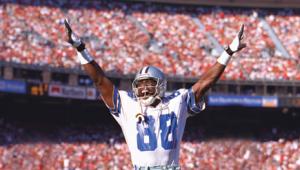
Great
sports shots are as much about reaction as anticipation.
No photograph proves that point more than this cover
image from the February 2002 Super Bowl.
Photos © 2002, Jay Abend, All Rights Reserved
|
|
This is the third and final
in a series of articles devoted to a topic near and dear to every Shutterbug
reader’s heart—gear! We love gear, and particularly love
to take a look into the bags, cases, and car trunks of well-known professional
photographers. This time around it’s the photojournalist’s
turn.
My glimpse into the world of big-city newspaper photographers started
while I was hanging around a pro camera store. (Something I do a bit
too much!) During a conversation with Garo Lachinian, at the time the
Director of Photography for the Boston Herald, I mentioned my interest
in his photographers, their gear, and their assignments. I told Lachinian
that I’d love to see one of the Herald’s premiere photojournalists
in action, preferably someone who shoots with a lot of gear. “You
should feature someone shooting sports…like Jim Mahoney,”
said Lachinian, “Yeah…Jim Mahoney is your guy.”
As it turns out, Jim Mahoney is the guy. When the New England Patriots
won the Super Bowl in February 2002, it was Mahoney’s full-page
image of winning field-goal kicker Adam Vinatieri who graced the Herald
the next morning.
On a brilliant summer day I met Mahoney, ideally enough on the infield
at Fenway Park. As with most really great photographers, he is a hell
of a nice guy, totally willing to expose all of his “tricks of
the trade” to me. Although the thought of another nine inning
baseball game was a snooze for the assembled media, for a studio-bound
photographer like me it seemed fairly exciting!
Although the Red Sox were in the middle of another “wait till
next year” season, Bostonians still take every game deadly serious.
A sports crazy town like Boston practically inhales the morning paper
after every Red Sox, Bruins, Patriots, and Celtics game. While terrific
writers and insightful columnists are the stock in trade of any major
metropolitan newspaper, great images of the previous night’s game
are critically important. As with most daily papers, the Herald always
makes sure one of their guys is at every home Red Sox game.
|
| |
|
The “Boston Herald’s” Jim Mahoney poses
with his typical baseball setup. |
|
Sports Gear, 2003 Style
As Mahoney and I began chatting
he ran me through his gear. Like most Nikon shooters working for newspapers,
he has gone all digital and is using Nikon D1H digital bodies. The 2.7-megapixel
D1H file is plenty for newsprint, and the vastly improved color over the
original D1 ensures that the Herald’s acclaimed full-color spreads
will look perfect. For sports the D1H’s 5 frames per second and
healthy 40 frame buffer means that aggressive shooting is encouraged.
An ISO range of 200-1600 allows the digital photojournalist to start out
shooting in broad daylight and finish under artificial lighting, all without
missing a single shot.
Sports Glass
While NFL football games require super-long glass like exotic 600mm f/4.0
lenses, the baseball shooters tend to favor moderate 300mm tele lenses.
Mahoney’s main lens is a Nikkor 300mm f/2.8 AF “S” lens.
With silent internal focusing motors and the D1H’s TTL Phase Detection
AF system, the lens positively bangs into perfect focus in most circumstances.
He also relies upon the super-sharp Nikkor 80-200mm f/2.8 AF “S”
lens, a 17-35mm f/2.8 and 1.4x and 2x Nikkor tele-extenders. A Sigma 14mm
fisheye rounds out the lens kit. While the Boston Herald has provided
him with a pair of Nikon D1H SLRs, it’s up to Mahoney to provide
the lenses, a sizeable investment.
Sorry, No Film
Into his Lowepro reporter camera bag Mahoney also packs a Mac G3 PowerBook,
spare battery packs for computer and cameras, battery chargers, an SB-28
DX flash with Stofen diffuser, a Gitzo monopod, and a mess of SanDisk
CompactFlash cards. Film? Sorry, no film here!
Busy Schedule
Shooting baseball for a daily paper is not a task for the slow or lazy.
From batting practice through the bottom of the ninth these guys are busy!
Mahoney arrives at the ballpark around 4:00 in the afternoon for a 7:05pm
game start. Sometimes there are images to grab—special interest
pieces, visiting celebrities, etc., but usually it’s hanging around
just in case something happens or someone is injured. Once batting practice
is over it’s time to stake out your position.
Fenway, as with most major league ballparks, has two “wells”
for still photographers. Located on the first and third base sides of
the field, it’s a first-come-first-served situation, with a few
exceptions. At most games the first base well is comprised of the teams’
photographers, photographers from the Boston Herald and The Boston Globe,
and a few photographers from either AP or Reuters. The third base well
houses other wire service photographers and those representing out-of-town
media.
By 6:45pm Mahoney is at work, setting up his PowerBook, making sure his
cameras are set properly, and making sure he has a connection to the Herald’s
picture desk using Fenway’s antiquated phone lines. Once the game
starts it’s all about the game. Sitting next to Mahoney is The Boston
Globe’s sports ace, Jim Davis. Between the two Jims you’re
looking at well over 40 years worth of photojournalism experience. Though
the two papers compete ferociously on the newsstand, Mahoney and Davis
are great friends.
Know The Game
One of the keys to shooting sports is really understanding the game at
hand, and trying to predict the flow of action. No autoexposure, autofocus
camera will turn a spectator into a photojournalist. As with many long-suffering
Boston fans, these guys know baseball. They instinctively know which hitters
tend to hit to the opposite field, which runners are likely to take off
on a 3-2 count, and when there will be a close play at first.
From the first base photographer’s well the entire game takes place
right in front of you. While it is arguably the best seat in the house,
it also requires a tremendous amount of concentration to both get the
shot and avoid being hit by the fairly continuous stream of laser-beam
foul balls. The 300mm lens is perfect for waist-up shots of the pitcher,
double plays at second, and great outfield catches. All of the pros have
another body ready and waiting with a shorter lens. I watched as The Globe’s
Davis seamlessly went from his 300mm f/2.8 to another body with a medium
zoom lens to catch a play at first, all in the course of about 1/4 of
a second.
For this game I was perched in the less desirable third base well. As
with most photographers not tuned to the rhythm of baseball, I tended
to miss almost every great play. I got shots of Boston’s Johnny
Damon sliding after a great play, Oakland’s Miguel Tejada just before
he threw out a runner at first, and Manny Ramirez trotting to first after
a home run. (I missed the swing.) Even with AF most of my shots were soft,
since night baseball really requires the fast 300mm f/2.8 lens for snappy
AF performance. My tele lens with 2x tele-extender was just too slow and
too soft.
|
| |
|
Here’s what’s in the bag: Nikon 300mm f/2.8
AF, Apple Macintosh PowerBook, Sigma 14mm f/2.8EX, two Nikon
D1H bodies, Nikkor 17-35mm f/2.8 AF, Nikkor 80-200mm f/2.8
AF, Gitzo monopod.
|
|
The Digital Flow
The digital camera revolution has really changed the dynamic of a sporting
event for newspaper shooters. Every spare moment is dedicated to downloading,
editing, captioning, and transmitting images. It’s quite a furious
pace! For night games Mahoney is under the gun, trying to capture images
from that night’s game and transmit them back to the paper to meet
the early edition’s 8:30pm deadline.
Mahoney uses a program called Photo Mechanic from Camerabits (www.camerabits.com)
designed specifically for photojournalists to view images then edit select
images in Adobe Photoshop. The finished images with imbedded captions
are sent as 8x10 images at 200dpi back to the paper. The medium-sized
JPEG files only take a few minutes each to send. If you’ve ever
spent half a day agonizing over that perfect digital image, imagine sorting,
editing, cropping, color correcting, and captioning a handful of images
in about 21/2 minutes!
Spend some time chatting with battle hardened photojournalists and you’re
bound to get some stories. With 22+ years in this business and a startling
17 years at the Herald, Mahoney has been all over the world working on
stories. At the Boston Herald photojournalists aren’t coverage specific—they’re
all general photojournalists. Since Mahoney handles the 4pm to midnight
beat, he gets the weekday ball games. Both Mahoney and Davis were quick
to point out that unlike the magazine shooters that come in from out of
town, they were journalists first, sports shooters second. They were just
as willing to shoot breaking news as a ball game, but clearly sports is
where their heart is. While Mahoney’s first love is baseball, Davis
says that it’s pro football that is the most rewarding for him.
(Unlike the anticipation of baseball, football is all about positioning.)
Experience Counts
Shooting sports is not just about the equipment, but mainly about experience.
Mahoney shoots night baseball with his D1H set to ISO 1000, the highest
ISO setting before noise is visible in newsprint reproduction. Set to
Shutter Priority, Mahoney leaves the camera at 1/500 sec and records exposures
between f/2.8 and f/4.5, on average. Since the weird mix of early evening
daylight and the stadium’s metal-halide flood lights are somewhere
between daylight and tungsten, Mahoney has saved several custom White
Balance settings into his camera, eliminating the off-color results caused
by the camera’s Auto White Balance setting.
For many photographers, the idea of having the best seat in the house
for your city’s most desirable sporting events seems like a dream
come true. I’m a fairly accomplished photographer and I can tell
you firsthand…it’s a heck of a lot harder than it looks. Mahoney’s
nearly two decades of excellent work have not gone unnoticed, as he was
recently named the new Photo Editor at the Herald. Certainly an inspired
amateur can get great sports photographs, but without a good fast camera,
sharp and fast lens, and the kind of positioning that only a Press Pass
can yield, it’s an uphill battle.
|
 |
|
 |
|
|
 |
 |
 |
|