


- REVIEWS
Camera Reviews 
More Reviews Mobile Reviews Photography Reviews - GALLERIES
- VIDEOS
- BUYER'S GUIDES

The Photography Of Robert Leon; A Passion For People
If life is a series of experiences, then travel/documentary photographer Robert
Leon is indeed living a very full and interesting one. As a young boy, Leon
was mesmerized by the world depicted in his parents' National Geographic
and LIFE magazines. "I would dream of going to these places and was fascinated
by the different cultures," he says. Eventually, after stints as a corporate,
advertising, and fashion photographer, Leon turned his passion for travel and
people into a rewarding career.
Leon studied photography at the Alberta College of Art in Calgary, Canada. While
still in school he did a lot of commercial/advertising and annual report photography.
Later, he moved to Italy where he lived for nine years and worked almost exclusively
as a fashion photographer. "I was shooting pretty models wearing pretty
clothes," Leon states. "After a while it wore really thin as far
as content matter. It was very empty, superficial work."
 |
|
|
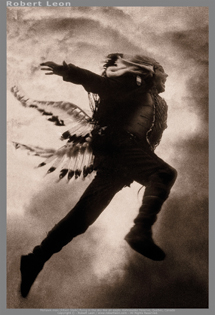
And so Leon decided to switch gears and revisit his passion for travel and
native peoples. "I started doing travel photography while still living
in Italy. I got assignments in Greece, Turkey, and Italy because I had contacts
with magazine editors in these countries. I found travel photography to be less
of a rat race than the commercial field. I would really dig in and find interesting
people to talk to and photograph while on the road."
Although Leon admits the competition for work in the travel field can be as
fierce as fashion, he says that "by sticking to what your heart wants
to photograph, the competition factor balances out because you can offer a unique
vision, style, or point of view of the same subject someone else shoots. There
are different calibers of travel photographers and everyone has their niche.
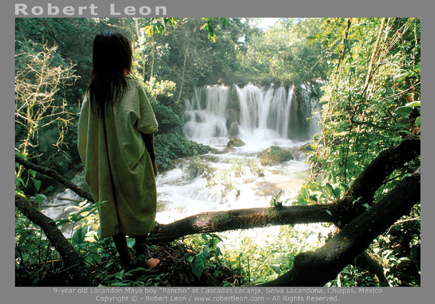
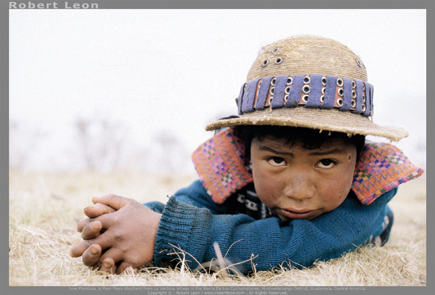
I love making portraits. I'm curious about people. I'm really driven
by cultures, in particular, indigenous cultures, which is my main area of focus.
I love costumes. I love rituals. I love trying different foods. But one of the
most important things I love about photographing--and being around indigenous
cultures--is their basic values about life.
 |
|
|
|
 |
"I wanted to learn about and experience different places. It's
taken quite a few years, but I've paid my dues like every photographer
has to. If I didn't have such a passion for it, I would've quit
a long time ago."
| |||||||||
|

| ||||||||








 FEATURED VIDEO


Get the Latest Photo Tips, News & Reviews from Shutterbug!







| Camera Reviews Other Reviews | |
Mobile Reviews Photography Reviews Columns | |
News | |
Features | |
How-To | |
Resources |
 © 2026 Shutterbug
AVTech Media Americas Inc., USA
All rights reserved