


- REVIEWS
Camera Reviews 
More Reviews Mobile Reviews Photography Reviews - GALLERIES
- VIDEOS
- BUYER'S GUIDES

Think Flash
Shooting Portraits Outdoors
|
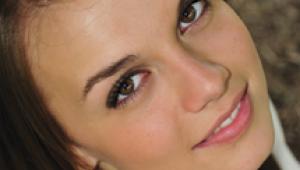
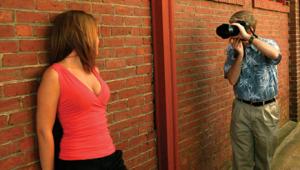
Photo enthusiasts often ask me, "What's the most important accessory I need for professional-quality outdoor people pictures?" I reply, "A flash unit, of course." Then they ask me for my best tip for using a flash. My advice: Think flashy outdoor pictures, that is, think about how a flash can be used outdoors to turn snapshots into great shots. Now, some of you are probably thinking that a light diffuser/reflector is a very important accessory for outdoor people pictures. You are right! It is, and I use one a lot. However, if I had to choose between a flash and a diffuser/reflector, a flash would be my choice. Why? A few reasons: I can use it without an assistant. It's good any time of the day or night. It saves the day when a distant subject is in the shade, or when his or her eyes are in shadow. But you can't simply slap a flash into your hot camera's hot shoe and expect to get professional quality results. You must think about what you are doing--the result you want to achieve. |
|||
Here are my top tips for great daylight fill-in flash pictures. After you check them out, try them out in the backyard or at the local park before you want to--or have to--take some serious pictures. 1) Get the right flash. For the best results, you don't necessarily need the best flash, but you do need a flash that offers what's called "Variable Flash Output (VFO)." Flash units with VFO let you control the amount of light the flash delivers, over and under the automatic/recommended setting. 2) Go down under. For most of my people pictures, I take several exposures under the automatic setting (with my camera set on program). I start at -1 and work my way down to -2. Using that technique, I get a good daylight fill-in flash exposure. I have found that pictures taken at the automatic or "0" setting tend to look too harsh and washed out. |
|||
3) Use a flash diffuser. On-camera flash units produce a harsh light, even when those little, plastic, built-in diffusers are popped into place. To soften this light when working relatively close to a subject, I use flash diffusers that attach to the flash head with touch fastener tabs. You can use a piece of tissue paper to create a similar professional effect, but you will not look like a pro when you are shooting. Flash diffusers not only diffuse the light, they spread the light. In doing so, they reduce the maximum working distance of your flash. Keep that in mind when shooting. To compensate for the reduced working range, you may want to use a faster speed film (or use a higher ISO setting on your digital camera). 4) Take it off! That's right, when it comes to flash pictures, you have to take it off--take the flash off the camera, that is. If you get a coil cord and swivel bracket (available at Adorama, www.adorama.com), you can take both vertical and horizontal shots with the flash positioned above the lens. "What's so great about that?" you ask. Well, when the flash is above the lens, the shadow from the flash will fall behind the subject--and not next to the subject, which can be annoying and unflattering. What's more, with a coil cord, you can hand hold your flash for creative lighting techniques, such as sidelighting. |
|||
5) See the light. When taking a daylight fill-in flash picture, think about what your flash is doing. It's filling in the shadows. It's adding controlling contrast in the scene. It's bringing out the natural colors of a subject, especially when a subject is in the shade (when green leaves may act as a green filter and make a subject look green). In addition, think about where the light is falling, which is especially important when hand holding your flash. I've seen more than a few photographers holding their flash above and off to the side of a subject, not knowing that the light from the flash is missing the subject--because they did not look where they were pointing. So, position your flash carefully, and see where the light will fall before you shoot. 6) Pack extra power. If
you use daylight fill-in flash as much as I do, you'll need lots of
extra batteries when you are in the field. I use rechargeable batteries.
They save money and they help to preserve the environment. |


| ||
|
||














 FEATURED VIDEO


Get the Latest Photo Tips, News & Reviews from Shutterbug!







| Camera Reviews Other Reviews | |
Mobile Reviews Photography Reviews Columns | |
News | |
Features | |
How-To | |
Resources |
 © 2026 Shutterbug
AVTech Media Americas Inc., USA
All rights reserved