


- REVIEWS
Camera Reviews 
More Reviews Mobile Reviews Photography Reviews - GALLERIES
- VIDEOS
- BUYER'S GUIDES

Scenes Within Scenes
Taking A Longer Look With Telephoto Lenses
Most of us have, on more occasions than we'd care to count, suffered through "presentations" of vacation photos. Whether fresh out of stacks of processing envelopes, chronologically arranged in albums, or clunk-whacking their way monotonously through a slide projector, you have to muster all your self-control to stifle a yawn and keep smiling. If the perpetrator of the show is an amateur photographer, then hopefully you'll at least have been spared the endless shots of the spouse and kids squinting into the sun in front of every major and minor monument encountered en route. Even so, the overall effect is likely that of shuffling through a pile of post cards: lots of pretty pictures with an underlying sameness. The problem isn't necessarily the pictures themselves, which may actually be fairly respectable, but rather the unrelenting similarity. Not a similarity of subject, but of approach, with the wide angle, overall, "get-it-all-in" shot most often being the culprit. Again, it's not that there's anything wrong with broad, establishing shots; they paint the scenic canvas that you should then pause and examine for further pictorial possibilities. Possibilities that build the visual vocabulary used to expand on your photographic story, making it interesting for the viewer. Within the majority of such compositions are other images waiting to be discovered. It may come slowly at first, but with a little practice, spotting these sub-elements of the wide view becomes second nature. It's just a case of identifying other pieces of the overall puzzle that would stand alone as compositions in their own right, serving as accent images to the original. With the breakneck pace of life today, taking the extra moment to look can be the greatest initial hurdle to clear. |
|||
Once you've visually isolated your potential prey, you "bag" them with long range zooms and longer fixed focal length telephotos. George Lepp, the well-known nature photographer, is an accomplished proponent of this general technique, dubbing it "optical extraction." The basic principal, however, goes back 50 years or so to the heyday of the twin-lens Rollei-flex. Not having interchangeable lenses, Rollei was fond of promoting the advantages of medium format by touting the ability to crop several smaller areas of the 6x6cm negative into additional compositions. Today's potent zooms let you do the same thing, but without whittling down the film area. Focal lengths between approximately 100mm and 400mm are most useful; longer lenses tend to yield images too abstracted to bear much relevance to the establishing shot, besides being too cumbersome to drag along on the average vacation. The growing number of compact, long range zooms such as 28-200mm and 28-300mm make great travel lenses, offering great reach with minimal weight and bulk. Indeed, such zooms are really your only option to practice this technique when faced with the time and mobility restraints of guided tours. |
|||
Before you try your hand at this method of seeing, you'll want to polish your long lens skills. With 300-400mm focal lengths, the tiniest vibration will be greatly magnified, reducing the sharpest tele to fuzzy mush. A lightweight tripod that is adequate at 100mm will likely prove worthless with longer lenses. If your camera has a mirror lockup feature, use it. A cable release is a must; you simply can't avoid camera shake when releasing via the camera's shutter button, or for that matter with too short of a cable release. The flimsy-wired electric releases for modern electronic cameras are superior for vibration avoidance. If a sufficiently sturdy tripod is too bulky and heavy for vacation duty, then use a monopod in conjunction with faster films, which permit higher shutter speeds. The often suggested "field fixes" of weighting the tripod or lens, though not totally without merit, seldom improve the involved mechanics significantly enough to overcome the basic problem, lack of structurally effective mass. The accessory adjustable arms (Bogen, Kirk) that clamp to a tripod leg and extend to support the front end of a telephoto lens are more effective, but too time consuming to use on tours (unless the tour is specifically tailored to the needs of photographers), or with a time-unsympathetic spouse and kids in tow. This "scenes within scenes" scenario is not meant to replace a thorough physical exploration of a location. If you have the time and the opportunity, walking around and checking out your subject from all angles will produce the greatest variety of shots. However, when you're pressed for time, or when physical barriers prevent a closer approach, a sharp eye and a long focal length can provide visual diversity without moving more than a step or two from your original shooting position. In addition, the compressed telephoto renditions provide a pleasing variety of perspective that adds significantly to the visual rhythm and pacing of a presentation. |
|||
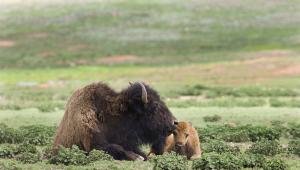
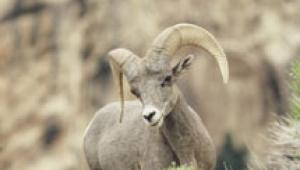
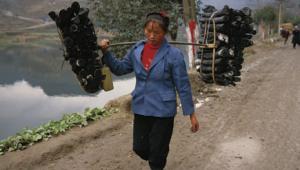
Another mental hurdle for many amateurs exploring this technique for the first time is getting over the idea that the "extracted" shots have to have the same impact as the wide shot. In some instances they may well have, perhaps even more so, but on average they'll be of a visually "quieter" nature, serving in a supporting role. This variation in visual intensity goes a long way toward building a presentation with a coherent flow, elevating it from mere collections of images. The illustrations accompanying this article were purposely shot as you would while on vacation--with whatever weather and lighting conditions that Mother Nature happened to be doling out at any given moment. The locations are close enough for me to have returned as often as needed to obtain perfect light direction, idyllic clouds, the full foliage of spring or summer, etc., but that would run contrary to the intended object lesson. The Object of this exercise is not to produce studied "perfection," but to be able to capture the greatest degree of variety possible in the least amount of time. To this end you also have to learn to quell the urge to run around looking for a slightly better vantage point for the secondary shots in each series. The time you waste wandering around will cost you in lost picture opportunities; just about the time you finally settle on a shooting position, the tour guide will start herding you along to the next stop, the light will disappear, a garbage truck will pull into your field of view and park, or wildlife will take flight. Learn to spot relevant elements quickly, and get them on film expeditiously. If your camera has the feature, auto-bracketing can increase your batting average when shooting under tricky lighting conditions on the fly. None of the auxiliary images shown here required more than three steps from the original shooting position. Before closing, I'd like to offer some practical advice regarding lens selection. First, when traveling, bulk and weight are critical. Careful equipment selection will result in an enjoyable vacation and photo outing; done wrong, it can be the trip to hell and back. Choose slower, lighter, compact lenses, combined with faster films, rather than fast, bulky, heavy lenses and slower films. I would rather have a sharp image with slightly visible but tight grain structure, as opposed to a blurred, grainless one. Second, choose a wide range zoom that goes from wide to long tele, such as the 28-200mm and 28-300mm models previously mentioned. If you try using a pair of zooms, such as a 28-70mm and a 70-210mm, you'll find that you're constantly switching from the former for the establishing shot, to the latter for the additional series shots. This wastes time and grows old fast. To extend your range of focal lengths further, add one super-wide lens, such as a 20mm, along with a compact 300mm or 400mm f/5.6 tele; faster teles are too big and too heavy for casual travel duty, not to mention having gargantuan filter requirements. Also, I prefer to carry the fixed focal length long tele, rather than tack a tele-extender onto an already slow zoom; adding a 2x extender to a f/5.6 zoom (at longest position) results in an f/11 lens, wide open--ISO 1600 anyone? Give this technique a try; I think you'll like what it can do for your travelogs, especially slide shows. And you're not the only one who'll appreciate the difference; the odds are better than ever that you'll no longer have to resort to subterfuge to lure your unsuspecting friends within range of your vacation photos. |


| ||
|
||








 FEATURED VIDEO


Get the Latest Photo Tips, News & Reviews from Shutterbug!







| Camera Reviews Other Reviews | |
Mobile Reviews Photography Reviews Columns | |
News | |
Features | |
How-To | |
Resources |
 © 2026 Shutterbug
AVTech Media Americas Inc., USA
All rights reserved