


- REVIEWS
Camera Reviews 
More Reviews Mobile Reviews Photography Reviews - GALLERIES
- VIDEOS
- BUYER'S GUIDES

Jasper, Banff, And Yoho
A Photographers Delight
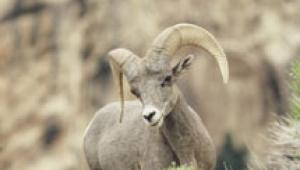
A couple of years ago as Ann, my most significant other, and I were discussing where to go during our summer break she made a suggestion. Like most of her suggestions, this one proved to be a gem. I had never been to the Canadian Rockies, although we had traveled through British Columbia and Vancouver Island the summer before. Well, I really preferred to return to the coast but I thought, "What the heck, if it's too boring we can always head back out West and at the worst, we'll have seen some new territory." So we packed the cameras, the dog, and our kayaks and hit the road. Luckily, we also packed the rain gear. But more on that later. Whoever said, "getting there is half the fun" must have had Western Canada in mind. From the moment we crossed the border we were traveling through a wonderland. Opting for the less-traveled route, we followed Trans Canadian Highway 1 along the Fraser River gorge. The Fraser, with the Canadian National and the Canadian Pacific railroads hugging its banks offers lots of photo opportunities and historic attractions, so allow plenty of pull-off-the-road time if you choose this route. At Kamloops we followed High-way 5 to Highway 16 to reach Jasper. An alternate route continues on Highway 1 through Yoho National Park to reach Lake Louise and Banff. Either route will put you on the Icefields Parkway. From the east you would follow Trans Canadian Highway 1 from Calgary to Banff or Highway 16 from Edmonton to reach Jasper. Jasper lacks some of the glitz and glitter, not to mention crowds, of Banff and Lake Louise, but the scenery is every bit as impressive. I love to photograph wildlife but as my longest lens is only a 300mm, occasionally augmented with a tele-extender, I wasn't hopeful of much success. Well, I was in for a pleasant surprise. I found I could get tight portraits of elk and Rocky Mountain bighorn sheep right from the car with my 70-200mm zoom. However, don't leave the long stuff at home if you've got it. Smaller birds and, of course, bears and moose will require the longest focal lengths you can manage but don't worry if, like me, you don't own any super long glass. |
|||
Side Trips Another photogenic spot on the way to Maligne Lake is the Maligne Canyon. Here, the river has created a gorge through the limestone bedrock that is 75' deep in places and only 3' wide. An amazing amount of water shoots through an incredibly small space. There is an interpretive trail, a couple miles in length, that provides many good places to photograph. |
|||
The Jasper Tramway is another must. It takes you up to the Whistlers alpine zone, real tundra and amazing vistas if you don't hit it in the fog, as we did. There are hiking trails and an excellent restaurant at the top. If all this hiking, paddling, and camera lugging has you a little sore of foot, I've got a little treat for you. About an hour northeast of Jasper via route 16 is Miette Hotsprings. Soak your old bones in one of the two hot pools tempered to 104F and, if you're up to it, jump into what they euphemistically call the plunge pool. Plunge pool is Canadian for glacial runoff as nearly as I could tell. Traveling southeast toward Banff on the Icefields Parkway (93) you'll find lots of places that demand a photograph or two, so plan on taking your time. If you like waterfalls be sure to take the alternate route (93A) so you can see Athabasca Falls. This is another of those narrow gorges with tons of water rushing through. About half way to Lake Louise you'll come upon the Athabasca Glacier, part of the Columbia Icefield, and I do mean you'll come upon it. You round a bend in the road and there is one of the most incredible sites you'll ever see. There is a wonderful visitor's center located at the foot of the glacier and two lovely campgrounds just a bit farther on. For my hiking readers there is a day hike I highly recommend in this area. The trail head is at the Wilcox Pass campground and, although it is steep it is relatively short, the views are breathtaking. You will actually hike into open tundra with views across the valley to the Athabasca Glacier and the Columbia Icefield. This hike starts at about 6500' so take your time and bring plenty of water. |
|||
Lake Louise and Banff are areas that you should visit. The scenery is wonderful and the architecture interesting, but they are very touristy and, for my taste, at least, too crowded. Besides, the scenery is every bit as spectacular away from the crowds, so we didn't spend much time in either spot. Yoho is a Cree expression of awe and wonder and after you've spent time there you know just how appropriate it is. From the Icefields Parkway you take Trans Canadian Highway 1 west over Kicking Horse Pass and drop down into the town of Field. There's not a lot of town but a wonderful visitor's center is right off the highway. Although it's not a great Kodak moment, Divide Creek is something you should try to find. There's a turnoff near the summit of Kicking Horse Pass that leads to a parking area and a short path to a small creek with a rock in the middle. But it's a very special creek. The water that goes to the east side of the rock eventually finds its way to Hudson Bay while that passing on the west side ultimately flows to the Pacific Ocean. A remarkable little stream. While Divide Creek may not provide any spectacular photographs, Yoho Provincial Park more than makes up for it. Railroad buffs will especially like Kicking Horse Pass with its two spiral tunnels. While we were there the best of the tunnel overlooks was being refurbished and was closed. The pass is historically unique, as it was built with a gradient twice as steep as was/is considered safe. After much loss of life and equipment, two spiral tunnels were completed in 1909 that reduced the grade to 2.2 percent. You can actually get a photo of a train simultaneously entering and exiting some 40' higher/lower as it travels through these engineering marvels. The visitor's center in Field has much information about the Canadian Pacific Railway and its local history. |
|||
Are you ready for more waterfalls? Takakkaw means magnificent in Cree. The Cree must be famous for understatement, as it's the highest waterfall in Canada, 1248', and is one of the highest in North Amer-ica. There is a hiking trail up to the base of the falls, and several points from which to photograph this impressive site. From the parking area at the base of Takakkaw Falls there is another trail that follows the Yoho River to Laughing Falls and Twin Falls. Another lovely hike is the interpretive trail that skirts Emerald Lake. Allow a couple of hours or so to complete the loop and I'd really suggest packing a picnic lunch. For us it was one of the most memorable mornings of the trip. I alluded to weather earlier and you do need to be prepared for some rain. As the locals say, "It only rained twice, once for 14 days and the second time for 10." Seriously, it rained some part of almost every day we were there. So, bring your rain gear and plan a strategy for keeping your cameras dry. If only we could figure out a way to wring out a wet Samoyed. What was our favorite place? Which spots do we want to return to? I'm not exaggerating one bit when I say all of it. Any, and I mean any, of the places I've described could keep a conscientious photographer busy for a lifetime. Additional Reading British Columbia Handbook; Hempstead and King; Moon Travel Handbooks, 5855 Beaudry St., Emeryville, CA 94608; ISBN 1-56691-191-5 British Columbia Wildlife Viewing Guide; Bill Wareham; Lone Pine Publishing, No. 206 10426-81 Ave., Edmonton, AB, Canada T6E 1X5; ISBN 1-55105-000-5 Central Rockies Wildflowers; Mike Potter; Luminous Compositions, PO Box 2112 Banff, AB, Canada T0L 0C0; ISBN 0-9694438-3-8 Essential Vancouver and British Columbia; Carol Baker; Passport Books, 4255 W Touhy Ave., Chicago, IL 60646; ISBN 0-8442-8941-8 Photo Traveler's Guide to€ Canadian Rockies; Photo Traveler Publications, PO Box 39912, Los Angeles, CA 90039 Walks and Easy Hikes in the Canadian Rockies; Graeme Pole; Altitude Publishing Canada Ltd., 1500 Railway Ave., Canmore, AB, Canada T1W 1P6; ISBN 1-55153-700-1 Western Canada Travel Smart; Lyn Hancock; John Muir Publications, PO Box 613, Santa Fe, New Mexico 87504; ISBN 1-56261-320-0 |


| ||
|
||








 FEATURED VIDEO


Get the Latest Photo Tips, News & Reviews from Shutterbug!







| Camera Reviews Other Reviews | |
Mobile Reviews Photography Reviews Columns | |
News | |
Features | |
How-To | |
Resources |
 © 2026 Shutterbug
AVTech Media Americas Inc., USA
All rights reserved