


- REVIEWS
Camera Reviews 
More Reviews Mobile Reviews Photography Reviews - GALLERIES
- VIDEOS
- BUYER'S GUIDES

Making One Light Two
Get The Main And Fill From One Source
Through the years, I've experimented with many different styles of light and many different light modifiers. There's an old saying that "light is light." That's true, but what a complicated mistress she is. When it comes to light, there are basically four things to keep in mind: quantity, quality, direction, and color. The trick to getting the light you want is in how skillful you are in mixing the four ingredients together. Let's look at each segment individually to see how they work in concert.
Quantity
This is probably the most obvious. We grab our light meter and take a reading.
If we're outside reading daylight, that's how much light we have.
We either have to change locations or time to change the amount of light. Simple.
In the studio, we can adjust our light source's power supply to give us
more or less. Or we can move the light source closer to the subject to get more
light or farther away to cut the intensity. While there are other factors to
consider, for now let's ignore them. Once again, simple.
 |
|
|
Quality
When talking about the quality of light, we hear terms thrown around all the
time like hard light, soft light, wraparound light, etc. These terms refer to
how sharp the light is. Generally speaking, the larger the light source is in
relation to the subject, the softer the light. For example, the sun is a pretty
big light source, but it's 93 million miles away from my subject and a
little speck in the sky, so relatively speaking, it's pretty small, and
thus will give us a hard, sharp light. Staying outside, if I place my subject
in an area where the open sky is my light source, then that whole "wall
of light" that strikes him is my light source, then it's very big
relative to my subject. The light in this case will be soft and diffused. More
on that later.
Direction
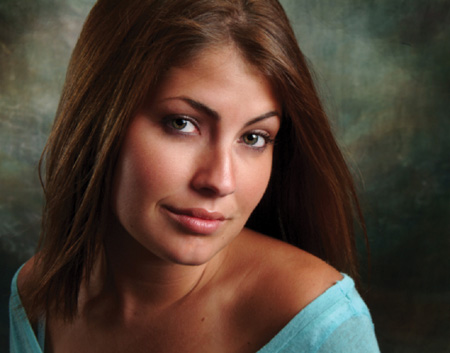
As a photographer, the direction of light is critical. It can give shape, make
things appear flat, create mood, and many other things. Think of photographing
a couple on the beach at sunrise. The light is behind them and we're getting
a beautiful silhouette. Now take the same photo at noon in the same location.
We get an entirely different look from the sun being high above our subjects
than when it was behind them. In portrait photography, photographers have used
"short light," shooting from the shadow side of a person's
face to make them appear slimmer, for years. This is just one example that shows
the importance of light direction.
 |
|
|
| |||||||||
|

| ||||||||







 FEATURED VIDEO


Get the Latest Photo Tips, News & Reviews from Shutterbug!







| Camera Reviews Other Reviews | |
Mobile Reviews Photography Reviews Columns | |
News | |
Features | |
How-To | |
Resources |
 © 2026 Shutterbug
AVTech Media Americas Inc., USA
All rights reserved