


- REVIEWS
Camera Reviews 
More Reviews Mobile Reviews Photography Reviews - GALLERIES
- VIDEOS
- BUYER'S GUIDES

Peter McGowan: Nautical Images Extraordinaire
All Photos by Peter McGowan
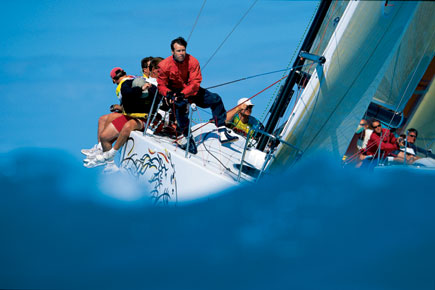
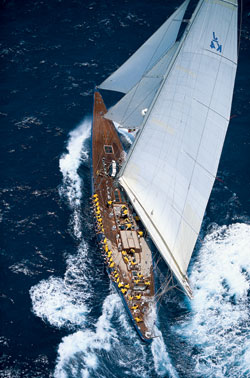
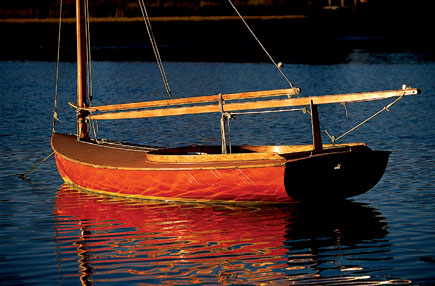
Taken from the viewpoint of one who clearly loves the outdoors, Peter McGowan's images of water sports draw the viewer in and make you feel the excitement of the open sea.
 |
|
|
"I've always liked photography," he says, "but I came into it rather late." He grew up on Cape Cod, and as his father loved to paint, McGowan grew up with a real appreciation for aesthetics. "I was always exposed to art." At Roanoke College in Virginia, he majored in political science and fixed boats in his spare time. Once out of school, he lived on Martha's Vineyard and "became a surfing and ski bum."
On the suggestion of friends, McGowan eventually signed up for courses at the New England School of Photography. "I learned how to run a studio," he says, adding that the business education was good for him. "You can't teach some things, like how to be talented."
 |
|
|
I Can Do That! McGowan seems to have been born with a great eye for what works on film or a memory card. "Perspective and point of view are important in my photography," he explains. At first, he didn't know what he wanted to specialize in photographically, but he hoped to combine his love of sports and fine art. He finished his photo courses in July, and was sailing as a hobby. He began looking at sailing magazines and decided he could do that type of photography.
 |
|
|
In the fall, he talked to a few nautical photographers about learning how to get into their business, but found to begin with, "no one was really forthcoming." Nonetheless, he went out on boats with several prominent sailing photographers. Onne van der Wal, a world-renowned marine photographer, encouraged McGowan early on. At the time, van der Wal owned Stock Newport, a marine stock agency to which McGowan later contributed. (Photographic also interviewed van der Wal for a Career Profile, which appeared in our September, 1996 issue.)
| |||||||||
|

| ||||||||












 FEATURED VIDEO


Get the Latest Photo Tips, News & Reviews from Shutterbug!







| Camera Reviews Other Reviews | |
Mobile Reviews Photography Reviews Columns | |
News | |
Features | |
How-To | |
Resources |
 © 2026 Shutterbug
AVTech Media Americas Inc., USA
All rights reserved