


- REVIEWS
Camera Reviews 
More Reviews Mobile Reviews Photography Reviews - GALLERIES
- VIDEOS
- BUYER'S GUIDES

How to Shoot Action
There are different ways to reveal motion in a photo--you can freeze the action, blur it, or pan along with it. (You can even fake it by holding a Cokin Super-Speed filter in front of your compact camera's lens.) The next time you're taking pictures of a child's soccer game or horses running across a field, you may want to experiment with some of the techniques outlined in this article. You don't need a sophisticated SLR with a variety of lenses, either. A compact camera with a built-in zoom will do just fine. Have fun and practice, practice, practice! By familiarizing yourself with these techniques, you'll increase your chances of getting great action images.
 |
|
|
A fast shutter speed is necessary to stop action. If you have a compact point-and-shoot or digital camera, simply select your camera's sports mode, which automatically utilizes a fast shutter speed. If your camera allows you to override its automatic features, then you may be able to set a shutter speed manually. (The most effective shutter speeds for freezing action range from 1¼500--1¼5000.) When doing this, you'll also want to use a fast film in the ISO 400--1600 range, or a comparable ISO setting on your digital camera. Your camera's flash can also aid in freezing motion, as its duration is so brief. Flash is a good tool to use when the ambient light is low (but avoid using flash if you're in a situation where you may distract performers or athletes).
Besides setting your camera on its sports mode and using fast film, a good stop-action photo requires a little planning. If you can foresee the path your subject will follow, determine in advance where your best vantage point will be to get the best angle. Consider your lighting and background. It's also important to anticipate the moment of peak action you want to freeze. For instance, when shooting a baseball game you may want to get close to home plate and press the shutter button a split-second before the batter hits the ball.
 |
|
|
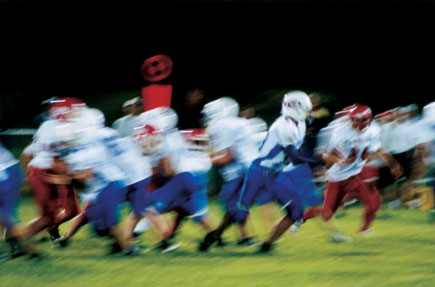
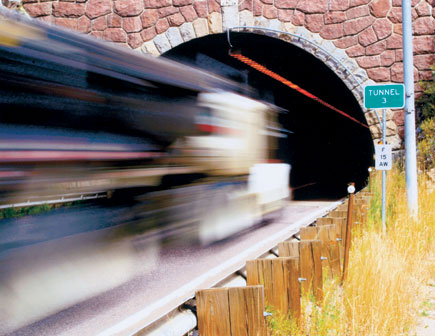
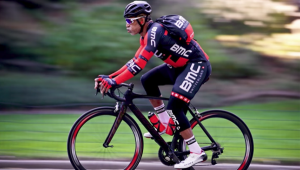
At the opposite end of the spectrum, you can effectively show motion by allowing a moving subject to become blurred as it moves across your field of view. To do this, you'll need to use a slow shutter speed, which can be accessed by using your camera's landscape mode. Keep in mind that a subject passing across your field of view blurs more easily than one headed straight toward you, and a close subject blurs more than a distant one moving at the same speed. Using a slower ISO 100 film or an equivalent setting on your digital camera will help you achieve soft, blurred results. And to make sure that stationary objects in your photo remain sharp, use a tripod or another means of steady camera support. You can render everything soft in your photo, however, if you combine the landscape mode (or a slow shutter speed) with a bit of camera movement.
| |||||||||
|

| ||||||||













 FEATURED VIDEO


Get the Latest Photo Tips, News & Reviews from Shutterbug!







| Camera Reviews Other Reviews | |
Mobile Reviews Photography Reviews Columns | |
News | |
Features | |
How-To | |
Resources |
 © 2026 Shutterbug
AVTech Media Americas Inc., USA
All rights reserved