


- REVIEWS
Camera Reviews 
More Reviews Mobile Reviews Photography Reviews - GALLERIES
- VIDEOS
- BUYER'S GUIDES

10 Portrait Tips
Helpful hints for better people-pictures
 1. Use the Best Focal Length
The best lens for portraits is more often than not a short telephoto—85-135mm for a 35mm camera. Why? Because short teles produce a good head size at a shooting distance that produces pleasant perspective. If you use a wide-angle lens, you have to move very close to your subject to get a good head size, and moving close expands perspective, elongating the subject's features. If you use a really long lens, you have to move back to get a good head size, and moving back compresses perspective, flattening the subject's features. Using a short telephoto focal length will give you the best results most of the time. But don't let this rule out creative choices of focal length and shooting distance.
Photos by Ron Leach
 2. Eliminate Distracting Backgrounds
One of the most common problems in portraits is backgrounds that distract from the subject. There are several ways to deal with this. Start by checking the background before you shoot. If it is distracting, move the subject and/or camera to a different spot, so the background is better. If you can't move, shoot with the lens wide open, so the resulting minimal depth of field throws the background completely out of focus. You can also use a portable backdrop, setting it up behind the subject to provide a better "setting." The important thing is, be aware of the background. Examine it in the viewfinder, and if you don't like it, do something about it before you shoot.
Photo by Lynne Eodice
 3. Posing
You'll get better portraits if you pose your subject naturally, rather than just having him/her stand there in front of the camera. Become a director, and work your subject into different stances (they needn't all be formal portrait poses), and see which look best through the viewfinder.
Photos by Ron Leach & Lynne Eodice
 4. Interaction
People interacting with one another can yield lots of great shots. Kids playing, business people meeting—anytime two or more people interact, there's the potential for interesting photos. If your subjects are aware of your presence, just be patient—they'll soon become involved in their activities, and you'll have some great subject matter.
Photo by Lynne Eodice
 5. Catchlights
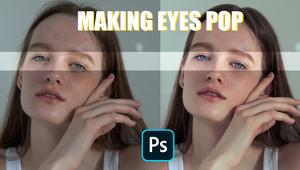
Portraits have more "life" if the subject's eyes have catchlights. Catchlights are reflections of a light source. If you are shooting with frontal lighting, the main light will provide catchlights automatically. If you're using back- or sidelighting, you can add catchlights by positioning a weak light source or a reflector just to one side of the camera. In an emergency, you can use on-camera flash, but the tiny centrally located catchlights thus produced aren't as attractive as larger catchlights to one side.
Photos by Ron Leach
| |||||||||
|

| ||||||||













 FEATURED VIDEO


Get the Latest Photo Tips, News & Reviews from Shutterbug!







| Camera Reviews Other Reviews | |
Mobile Reviews Photography Reviews Columns | |
News | |
Features | |
How-To | |
Resources |
 © 2026 Shutterbug
AVTech Media Americas Inc., USA
All rights reserved