


- REVIEWS
Camera Reviews 
More Reviews Mobile Reviews Photography Reviews - GALLERIES
- VIDEOS
- BUYER'S GUIDES

Photographing People on the Job; Eric Dusenbery’s ‘Business As Usual’ project
All photos by Eric Dusenbery
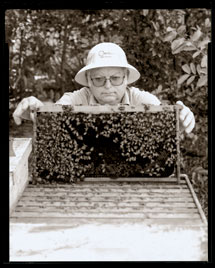
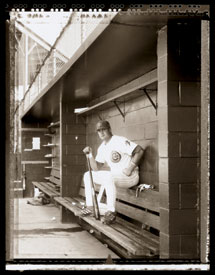
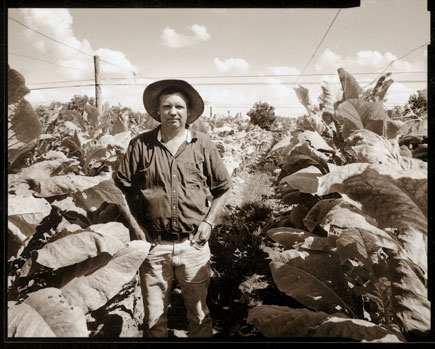
A tobacco farmer, a beekeeper, and a theme park belle are among the many occupations
documented by photographer Eric Dusenbery in a personal project entitled, "Business
As Usual."
What started out as a project to photograph 30 Floridians over the course of
30 working days has become a major undertaking to capture the working environments
of some 100 people, according to Dusenbery. It's estimated that there
are more than 20,000 different types of jobs in the U.S., and all of these professions
are represented in Florida. Besides, he points out, "We have many occupations
in Florida that are unique to this state."
 |
 |
||
|
|
A Sense of Pride
Most people are exposed to larger-than-life success stories like Bill Gates,
says Dusenbery. This is why the photographer chose instead to "give recognition
to the everyday worker." The project--which began in 2002--has
been financed solely by Dusenbery thus far, but he's seeking corporate
sponsorship to complete it and turn it into a book. At the time of this writing,
he was very close: "Just 10 more images." He's also recently
exhibited some of the photos in Orlando.
When planning this project, Dusenbery says he was originally inspired by his
father, a retired postal worker who worked at his job for 30 years. "He
loved his work, and had a lot of tales to tell. I found my neighbors'
and friends' jobs interesting too, and these people take a lot of pride
in what they do. Every profession contributes to the world in which we live."
His photos of workers make a visual connection to their importance in the community
today.
 |
|
|
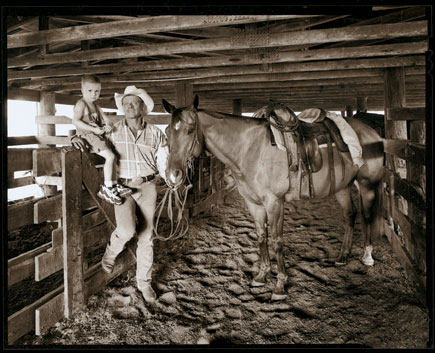
He wanted to represent a broad spectrum of the working world. Dusenbery says
that he's encountered both planned and spontaneous photo opportunities.
"A lot were referrals through neighbors and acquaintances. The more I
talked to people about their professions, the more the project just fell into
place." Dusenbery photographed his friends, acquaintances, and numerous
strangers for the project. In only one instance, he says, he was refused. Some
were "camera-shy," but nearly everyone appreciated the fact that
"someone was interested and respected what they did for a living."
Dusenbery says that the book may include some brief text about the people in
the photos and their chosen line of work. He especially wants to write about
those individuals with really interesting jobs and stories to tell. In exchange
for participating in this project, he's given everyone prints from their
photo session.
 |
|
|
Dusenbery is still doing a little commercial photography "and more documentary
projects," which he thoroughly enjoys. Several years ago, he chronicled
World War II veterans in a self-published book entitled, Veteran Voices. (See
our December, 2003 issue.) In the past, he's done primarily commercial
and editorial photography in his Orlando studio. He's also teaching photography
to high-school students.
"Business As Usual" depicts jobs that involve newer technology,
as well as more-traditional occupations, and Dusenbery seems to thoroughly enjoy
the whole experience. "Every person I've photographed enjoys their
job and loved life in general. They all went about their work the best they
could."
 |
|
|
The Photographic Process
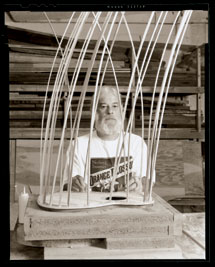
Dusenbery shot his "Business As Usual" project mostly with a 4x5
Calumet camera that he bought in 1980. "It's a real workhorse,"
he says. He used black-and-white 4x5 Polaroid film and 4x5 Kodak Tri-X Pan.
(For excursions like one where he photographed workers on a shrimp boat, he
shot with a Nikon F100.)
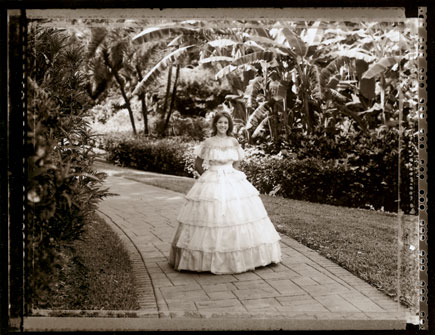
In printing the photos for "Business As Usual," he's included
the distinctive borders of the Polaroid film, and the edges of other films include
the emulsion information. These photos reveal accurate in-camera composition,
cropping and exposure. Dusenbery chose to do the film developing and processing
himself, "to get back to my photographic roots." He says he likes
working with the large 4x5 format, as he enjoys the entire experience "from
photography to the darkroom." He utilizes the darkroom for his own work
and his teaching. Although he has plans to teach digital techniques, he says,
"I think there's still a place for traditional imaging and processing."
 |
|
|
| |||||||||
|

| ||||||||












 FEATURED VIDEO


Get the Latest Photo Tips, News & Reviews from Shutterbug!







| Camera Reviews Other Reviews | |
Mobile Reviews Photography Reviews Columns | |
News | |
Features | |
How-To | |
Resources |
 © 2026 Shutterbug
AVTech Media Americas Inc., USA
All rights reserved