


thank you for the information, healthy greeting.
http://obatinsomniaalami55.blogspot.com/
- REVIEWS
Camera Reviews 
More Reviews Mobile Reviews Photography Reviews - GALLERIES
- VIDEOS
- BUYER'S GUIDES
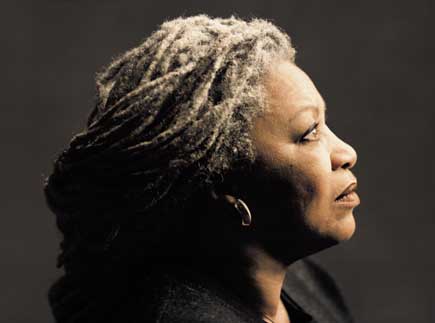
The Elegant Portraiture of Timothy Greenfield-Sanders
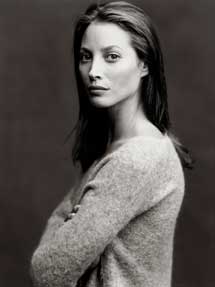
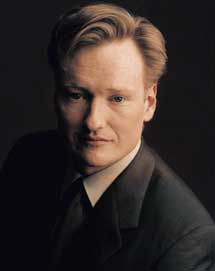
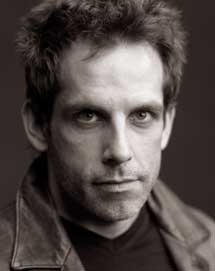
All Photos © Timothy Greenfield-Sanders
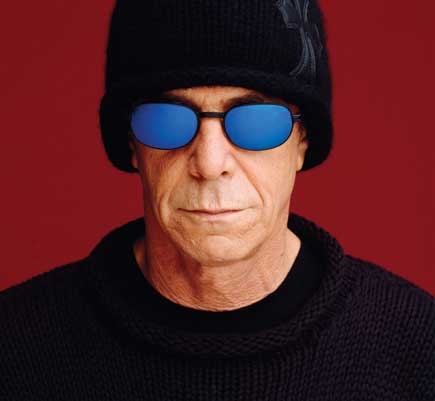
Simple yet revealing, his portraits are direct and get right to the heart of the subject. Timothy Greenfield-Sanders prefers to strip away pretentiousness when portraying political figures, entertainers, artists, musicians and other intriguing personalities. His backdrops never distract from the subject, and he often uses a single light source to mimic natural light. His work has elevated him to one of the most acclaimed portrait photographers of our time.
 |
|
|
Learning from the Masters
He started out with an interest in filmmaking, and majored in art history at
New York's Columbia University. He later moved to Los Angeles, to study
at the American Film Institute. Renowned actors and directors, such as Ingmar
Bergman, Orson Welles, and Alfred Hitchcock ("the masters of the cinema")
often made appearances at the school to talk about their work. To document these
occasions, AFI sought a volunteer to shoot these visiting celebrities'
portraits. On a whim, Greenfield-Sanders took the challenge and became the school's
photographer.
With these luminaries available to him, Greenfield-Sanders snapped away, and
learned much in the process. "Because of AFI, I got tips from celebrities
as well as access to them," he says. Hitchcock once remarked, "Young
man, your lights are all wrong," while Bette Davis criticized him harshly
for "shooting from below." ("She had some great swear words,"
he laughs.)
 |
 |
||
|
|
In addition to this once-in-a-lifetime experience, he took the opportunity
to build an impressive portfolio of many of the biggest names in Hollywood.
His access to these stars bolstered his reputation as a celebrity shooter and
he soon got work taking portraits for Interview and People magazines. "I
began loving portrait photography more than making films," he comments.
The Art World
In 1978, his wife Karin finished law school, and Greenfield-Sanders earned a
Master's degree at AFI the year before. They moved back to New York to
a converted church rectory, which became his studio as well as their home. Just
before leaving
Los Angeles, he bought an 11x14 view camera that became a conversation piece
with his subjects. "It was a more-challenging and interesting camera to
work with," he says.
His father-in-law is Joop Sanders, a founder of the abstract expressionist movement
in New York, who introduced Greenfield-Sanders to a number of artists. Thus,
painters like Willem de Kooning, Larry Rivers and Robert Rauschenberg posed
for his camera. Over a 20-year span, he photographed hundreds of artists, dealers,
collectors and critics. In 1999, 700 of these images were displayed at the Mary
Boone Gallery in New York, and he published an accompanying book, entitled Art
World. In the beginning, Greenfield-Sanders' editorial photos that he
shot for clients like Barron's and SoHo News helped to pay for this project.
 |
|
|
In 1979, poet Mark Strand came to Greenfield-Sanders' studio to be photographed
for Avenue magazine. After admiring the photographer's style, Strand asked
him where he was showing his work. Greenfield-Sanders replied, "I'm
not showing anywhere," so Strand promptly called Marcuse Pfeiffer, a prominent
art dealer, who launched Greenfield-Sanders' first New York gallery showings.
Coming Full Circle
Starting in 1986, he added fashion to his repertoire, shooting for Mirabella
and other major magazines. "For many photographers, fashion is the ultimate,"
he declares. "But I'm not a fashion photographer. I'm a portrait
artist who shoots fashion." In 1987, he also got an agent, Stockland Martel,
who--over the years--got him advertising work with clients like Charles
Schwab, Palm Pilot, Alcoa, Time-Warner, and Eileen Fisher.
 |
|
|
His editorial work developed his reputation as a photographer who created
serious, direct, and elegant portraits. As his reputation grew, he became one
of the elite group who are hired to photograph people in the public eye, such
as John Malkovich, Alec Baldwin, Hillary Clinton, Nicole Kidman, and Colin Powell,
among many others. In a sense, he had come full circle from his AFI days; "A
natural progression for me," he says.
NEXT: Page 2 »
| |||||||||
|

| ||||||||
- Log in or register to post comments
COMMENTS
Obat Insomnia Alami
Submitted by fazrin on October 31, 2014 - 7:37pm
Obat Sesak Nafas Alami
Submitted by fazrin on October 31, 2014 - 7:39pm
thank you for the information, healthy greeting.
http://obatsesaknafasalami55.blogspot.com/
Obat Maag Kronis Alami
Submitted by fazrin on October 31, 2014 - 7:41pm
thank you for the information, healthy greeting.
http://obatmaagkronisalami53.blogspot.com/
Obat Katarak Alami
Submitted by fazrin on October 31, 2014 - 7:42pm
thank you for the information, healthy greeting.
http://obatkatarakalami55.blogspot.com/
Obat Tumor Lambung
Submitted by fazrin on October 31, 2014 - 7:44pm
thank you for the information, healthy greeting.
http://obattumorlambung54.wordpress.com/
Obat Herbal Asma Anak
Submitted by fazrin on October 31, 2014 - 7:46pm
thank you for the information, healthy greeting.
http://obatherbalasmaanak1.blogspot.com/































 FEATURED VIDEO
PHOTO OF THE DAY

Today’s photo is Time with Mom by Catherine Terroni
eNEWSLETTER SIGNUP

Get the Latest Photo Tips, News & Reviews from Shutterbug!







| Camera Reviews Other Reviews | |
Mobile Reviews Photography Reviews Columns | |
News | |
Features | |
How-To | |
Resources |
 © 2025 Shutterbug
AVTech Media Americas Inc., USA
All rights reserved