


- REVIEWS
Camera Reviews 
More Reviews Mobile Reviews Photography Reviews - GALLERIES
- VIDEOS
- BUYER'S GUIDES

Photographing Mountains
Anyone who loves shooting scenics probably enjoys capturing the grandeur of mountains. As with most landscapes, it's best to photograph mountain scenery very late in the afternoon or very early in the morning. Some of the best high-country photos are shot by photographers who get up before daybreak or stop shooting only after dark. You'll find that an otherwise dramatic peak can look a little flat and uninteresting during the middle of the day.
 |
|
|
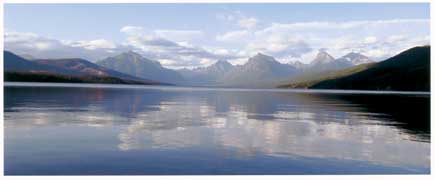
The low light at dusk and dawn lends texture, depth and form to photos of mountains. You can also get great shots in varying weather conditions--don't put your camera away simply because the weather has turned cloudy. Don't go out in a blizzard or heavy rain, but look for dramatic clouds building before a storm, or the sun peeking through clouds afterward. You can also get some dramatic pictures of mountain peaks disappearing into clouds or fog.
At high altitudes, a phenomenon sometimes occurs called alpenglow. This warm glow appears when blue and green wavelengths are scattered by the atmosphere and a little red light dominates, which briefly bathes a mountain in warm, reddish hues. Alpenglow can illuminate the clouds around mountains as well.
 |
|
|
High altitudes can also result in a lot of atmospheric haze because of the excessive ultraviolet light. Sometimes this haze can be rendered attractively in photos, such as images of mountains that graduate from a deep purple to distant peaks that appear to become progressively paler shades of blue. But if haze becomes a problem, try using a polarizing filter. If you have a compact camera, you may not be able to attach this filter to the front lens element, but you can hold it in front of your lens and rotate it to get the desired effect. A polarizer will deepen the color of the sky, minimize haze, and generally enrich the colors in a scene. This filter is most effective when the sun is at a right angle to your camera. At very high altitudes, the sky can appear almost black when you use a maximum amount of polarization, so adjust the amount by turning the outer ring, and experiment by taking pictures with and without this filter.
 |
|
|
| |||||||||
|

| ||||||||








 FEATURED VIDEO


Get the Latest Photo Tips, News & Reviews from Shutterbug!







| Camera Reviews Other Reviews | |
Mobile Reviews Photography Reviews Columns | |
News | |
Features | |
How-To | |
Resources |
 © 2026 Shutterbug
AVTech Media Americas Inc., USA
All rights reserved