


- REVIEWS
Camera Reviews 
More Reviews Mobile Reviews Photography Reviews - GALLERIES
- VIDEOS
- BUYER'S GUIDES

Want To Shoot Weddings?
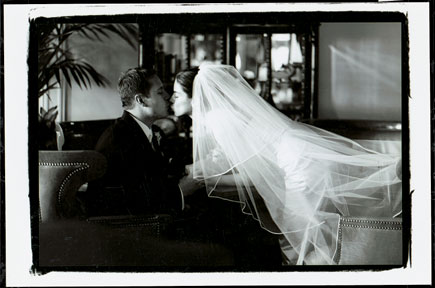
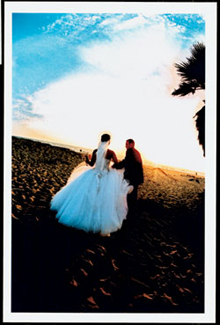
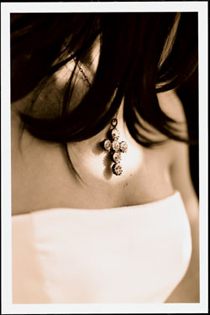
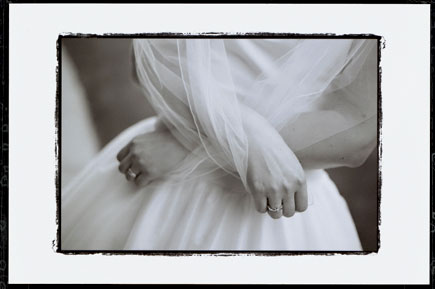
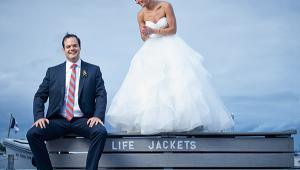
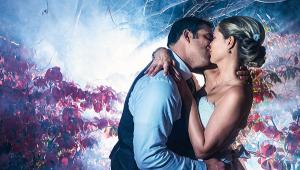
All photos by Sun-Dance Photography
Here's How
A close friend asks you to photograph her wedding--you accept the challenge. But how do you go about shooting such an important event? For those who have considered adding wedding photography to their realm of expertise, we interviewed one of the owners of a popular wedding and portrait studio, sun-dance photography, located in Ventura, California.
Blendi Reynolds has--along with her partner, Jeanne Tanner--operated sun-dance photography for about eight years. They've documented weddings all over California, and have even traveled throughout the U.S. and internationally to photograph couples on their special day.
 |
|
|
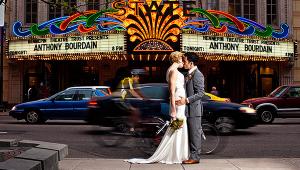
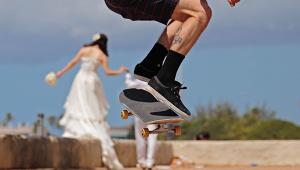
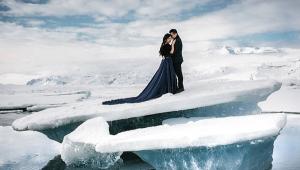
"We never thought it would get this big," Reynolds says of the studio's success. She credits the sun-dance photographers' ability to capture moments of true emotion on a couple's wedding day. They embrace creativity and eschew the more-traditional posed photos found in many wedding albums. "Candid, photojournalistic photography is our style," she comments. Apparently, this approach--coupled with great customer service--has worked well for them. They currently employ 11 additional photographers, and typically photograph 10--15 weddings on a weekend.
Gear Up for Weddings
"An important basic for anybody interested in getting into this field is a professional camera body, whether it's Canon, Minolta, Nikon, or another brand," advises Reynolds. At sun-dance photography, they shoot most images with 35mm cameras, rather than medium-format, which has traditionally been the wedding photographer's format of choice. She also emphasizes the importance of fast lenses. She recommends 50mm f/1.4, 85mm f/1.2, and a 28--105mm f/2.8 zoom ("a good workhorse"). She also uses an 80--200mm f/2.8 Image Stabilizing lens for close-ups when she has to maintain a distance from her subjects, and a 14mm fisheye lens for interesting effects. Reynolds' lenses range from a 14mm fisheye to a 300mm f/2.8 telephoto, and she usually takes 6--10 lenses on wedding shoots. "You're never better than your equipment, so invest in good camera gear--don't skimp!"
sun-dance offers the bride and groom a choice between film and digital imaging, and surprisingly, "98% of our customers choose film when they see the difference," Reynolds contends. The studio offers a choice of any combination of color, black-and-white, sepia-toned, infrared, or transparency film that's cross-processed for unique color effects. They don't often use flash, but prefer utilizing softer, more-natural light when shooting weddings. (Many churches also prohibit flash photography.) When working under natural lighting conditions, their preferred films are 1600-speed color and 3200-speed black-and-white. "The studio uses primarily Kodak films, including Portra ISO 800," adds Reynolds. She says that they always shoot twice the amount of film they need at a typical wedding. "About 16--20 rolls is the average for a four-hour wedding package."
 |
 |
||
|
|
Storytelling Wedding Photography
"You must listen to the bride and discuss what she wants ahead of time," Reynolds says. sun-dance photographers usually go over the wedding photo details about a month before the big day. "We basically get a timeline from the bride and groom, and find out what shots they want." They work within the couple's itinerary, she says, "but we still go with the flow, because the wedding day never seems to go as planned."
"The clients have individual requirements, but basically, we try to stay unobtrusive and out of sight. We don't direct the bride and groom." If the couple wants posed shots, sun-dance will accommodate them, she says. But most couples see the creative photos on sun-dance photography's Website, and generally want those types of images for their own wedding albums. And, although sun-dance does a lot of online bookings, "Most customers come from word-of-mouth referrals."
Most couples who approach sun-dance want candid photos, but sometimes their parents seek more-posed group pictures. However, the trend towards photojournalistic wedding coverage doesn't seem to be waning, according to Reynolds. The studio's goal is to cover the entire event, and to be spontaneous, she says.
The most important shots are generally the bride coming down the aisle, the exchange of rings, the kiss (after being pronounced "man and wife"), and the family's emotions, she declares. "You must constantly be on your toes--there's so much to shoot." At the reception, couples usually want their first dance documented. "We always capture those traditional moments," she says, "but candidly." The photographers utilize various photo angles, like shooting down on a scene from a second floor, or lying on the ground, shooting up. "We're everywhere," Reynolds asserts. "You must be open-minded each time you shoot a wedding. The people are new at each event, and often-photographed venues are decorated differently each time. We have no set rules."
 |
|
|
| |||||||||
|

| ||||||||




















 FEATURED VIDEO

Get the Latest Photo Tips, News & Reviews from Shutterbug!







| Camera Reviews Other Reviews | |
Mobile Reviews Photography Reviews Columns | |
News | |
Features | |
How-To | |
Resources |
 © 2025 Shutterbug
AVTech Media Americas Inc., USA
All rights reserved