


- REVIEWS
Camera Reviews 
More Reviews Mobile Reviews Photography Reviews - GALLERIES
- VIDEOS
- BUYER'S GUIDES
The Epson Perfection 1640SU Photo Scanner
If you have a computer and want to have some fun doing digital photo imaging, you'll need to get your film images into your computer. Scanning is the most effective do-it-yourself method of digitizing photographs on film. And, a flat-bed scanner with a film scanning adapter is the most versatile and cost-effective way to go. Epson, with their newest Perfection model 1640SU photo with film scanning at $399, is in my experience the best scan quality you can achieve for a very modest investment. In addition, for beginners setting up a digital darkroom, purchasing this Epson scanner model has the added benefit of a generous bundle of fundamental and useful software you'll find enabling and stimulating, including: Adobe PhotoDeluxe, Adobe Photoshop 5.0 LE, ArcSoft PhotoPrinter, Panorama Maker and Photo Montage. There's also ScanSoft TextBridge OCR, as well as the Epson scanner software and driver. As a bonus Monaco Systems is offering Monaco EZ Color color management, calibration and profiling software to Epson Perfection 1640 purchasers at a 50 percent discount. For more information and download access go to their web site at: www.monacosys.com. For this price category, Epson has set new performance specification levels in both resolution, with a linear array CCD of 1600dpi, hardware 3200dpi, and a scanning color depth of 14 bits per RGB channel (42 bit). The optical density is 3.2 D-max. This 11.7x8.5" reflective flat-bed, in the Photo version, comes with a 4x5" film scanning light source and film holders for film sizes from 35mm to 4x5. Two interfaces, SCSI 2 and USB, are provided, as well as support for both PC Windows and the Apple Macintosh platforms. |
||||
Using The Epson Perfection
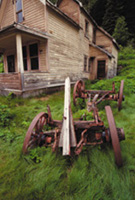
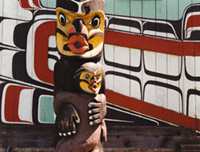
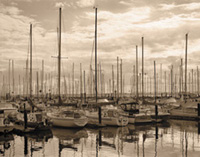
1640SU Photo Scanner When I was ready to test the Perfection 1640SU with the film adapter, I felt quite familiar with it, having run the scanner already on both a PC Windows 2000 workstation and a Mac G4. Usually I go through my library of film images to choose particular images to test scan, but this time I just opened a file drawer and took whatever I found. This included some old 6x4.5 Kodacolor negatives, some 4x5 chromogenic black and white negatives, a motley set of enlarged color dupes on 70mm film, a few 35mm slides, and some 6x6cm Hasselblad images on both black and white and transparency film. |
||||
For some reason the Epson film holders for the scanner were missing, which was no loss to me as they are rather flimsy, thin, plastic, and the one weak link in the Epson 1640 setup. So I used some homemade frames cut from stiff, thin, black plastic to hold the film a small fraction of an inch off the glass surface of the scan area. As I started my scanning I found the Epson TWAIN 5 software to be basic and simple. Once you have set the squiggly scan frame line to crop the image, you have the choice of clicking on the auto-adjust button or opening one of the three dialog windows to adjust the scan. The icon button with a tool symbol opens a dialog for gamut control comparable to Levels in Photoshop, but without a histogram. Then there is a curve adjustment dialog, if needed. And finally, there's a color dialog which has a rather unique but effective control. There is a picker (eyedropper) that allows selecting a color in the preview and then a slider that allows you to reduce or increase the saturation of the selected color. For instance, if there is too much blue from overhead skylight, click the eyedropper on a blue area, and then reduce the saturation. Finally, Epson TWAIN 5 supports outputting a non-adjusted image file at the full bit-depth of the scan (42 bits), which can then be color corrected in Photoshop or any other image editor (like Corel PHOTO-PAINT or Picture Window) that supports editing high-bit depth TIFF files. Overall, I found it relatively easy to accurately adjust all of the positive image film scans as well as the gray scale scans of black and white negatives. Color negatives, however, typically require more color correction as the conversion translation, which is different for every brand of color negative film, seldom hits the mark. I found it a virtual necessity to output color negative scans in 42-bit depth and then do the color correction in Photoshop. Regardless, relative to the amount and quality of color information in the original, the Perfection 1640SU Photo produced good detail, a full range of values with smooth tone gradations and very little or no noise in dark tones from all of my color film scans. I was even more impressed with the scans of medium and large format black and white negatives. The Perfection's gray scale scanning actually outperformed several much more expensive scanners I've used. |
||||
Conclusion And Recommendation |
||||
The only compromises are features of the film scanning accessory (which if purchased separately is under $100). The fact that the film scan area is limited to an area of 4x5" precludes doing full-roll contact sheet scans for proofing. In addition, the provided set of film holders are rather flimsy and somewhat inadequate. But as I mentioned, it is not difficult to make your own film support frames, which I found easier to use and quite effective. For more information about the Epson Perfection 1640SU Photo scanner call Epson at (800) 463-7766, or visit their web site at: www.epson.com. |
||||
Technical Specifications |



| ||
|
||


 FEATURED VIDEO


Get the Latest Photo Tips, News & Reviews from Shutterbug!







| Camera Reviews Other Reviews | |
Mobile Reviews Photography Reviews Columns | |
News | |
Features | |
How-To | |
Resources |
 © 2026 Shutterbug
AVTech Media Americas Inc., USA
All rights reserved