


- REVIEWS
Camera Reviews 
More Reviews Mobile Reviews Photography Reviews - GALLERIES
- VIDEOS
- BUYER'S GUIDES

Sony’s Alpha A900; A Prosumer-Grade, Full-Frame D-SLR With Class-Leading 24.6MP Resolution
Boasting incredibly high resolution for a 35mm-size D-SLR, the A900 features a full-frame sensor and some unique technology. Sony developed an Exmor 24x36mm CMOS chip for this camera; it’s packed with 24.6 million effective pixels but they’re quite large (5.9 microns vs. 5.5 microns with the A700) thanks to the oversized sensor and improved design. As a bonus, analog-to-digital conversion and noise reduction processing on the sensor help to provide optimal image quality.
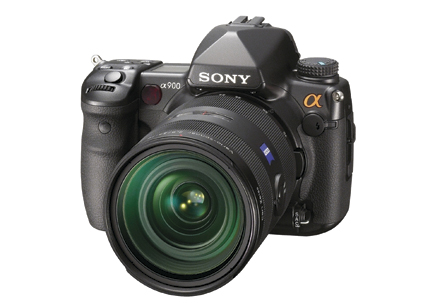 |
Aside from larger pixels for greater light-gathering ability, the full-frame sensor eliminates field of view crop so even a 28mm lens provides a true wide angle effect. This feature is great for those who love ultra-wide image making and don’t want to buy extremely short lenses. The A900 is ideal for use with a multi-platform Sony G, Carl Zeiss ZA, or Maxxum lens designed to project the large image circle required to fill the 24x36mm sensor. But the camera will accept the smaller Sony and Maxxum DT series of lenses designed for the D-SLRs with the APS-C-size (15.6x23.5mm) sensor. Granted, the actual image size will be smaller, so the resolution will be “only” 11 megapixels, still plenty for most applications. Do note that the viewfinder is not masked when the smaller lenses are used. It’s important to check the four thin brackets on the viewing screen for an indication of the actual image area.
Targeting serious photographers, the Sony A900 is a richly specified camera with many pro-caliber capabilities and some unique amenities. In my tests, this D-SLR provided extraordinary resolution, great convenience, and high speed in autofocus and framing rates. I also tried using multiple off-camera flash units with Wireless TTL control in a studio setting and found that the basic process is quite uncomplicated.
 |
|
|
Features And Technology
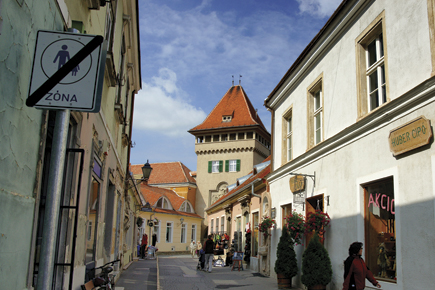
This is a rugged D-SLR with a moderately large magnesium-alloy body, moisture-resistant seals, a carbon-fiber shutter, and a 3” anti-reflective LCD with 921,600 dots. The large, all-glass penta-prism provides 100 percent scene coverage, 0.74x magnification, and an incredibly bright/contrasty view. The A900 includes the familiar sensor-shift SteadyShot stabilizer but employs an actuator that’s 1.5x more powerful; that’s necessary in order to shift the larger/heavier sensor unit at high speed for stabilization and automatic sensor cleaning.
 |
|
 |
|
|
Because the penta-prism delivers a 100 percent field of view, the reflex mirror in this full-frame sensor camera is very large. In order to minimize body thickness—while still accommodating the stabilizer—Sony developed a new mechanism that causes the reflex mirror to lift instead of swing. New internal components also reduce viewfinder blackout time and mirror slap. This feature—plus two BIONZ processors and a large buffer (temporary storage bank)—enable the camera to shoot at 5 fps (frame per second) for up to 12 raw photos or 25 Compressed raw shots or 105 Large/Fine JPEGs.
The A900 benefits from a new high-speed AF system with nine detection points plus 10 “assist” points to minimize the risk of lost focus; the central point is cross-hatched (for focus on any type of pattern) and is particularly sensitive when the camera is used with f/2.8 or faster lenses. The Dynamic Range Optimizer (DRO) feature—for increasing shadow detail—is very versatile, with two Automatic modes and five user-selectable levels.
 |
|
|
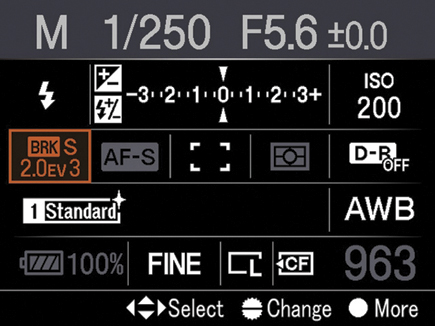
The A900 sports a full range of well marked, well placed analog controls, including an Fn button that activates the Quick Navi screen for controlling 11 distinct camera features. This is the only Sony D-SLR with a small data panel that provides basic information on settings; a great deal of additional data is available in larger font on the LCD monitor. It’s also equipped with two memory card slots. While the greatest burst depth is provided by a 233x or faster UDMA-compliant CompactFlash card, the A900 also accepts Memory Stick Duo/PRO Duo media.
 |
|
|
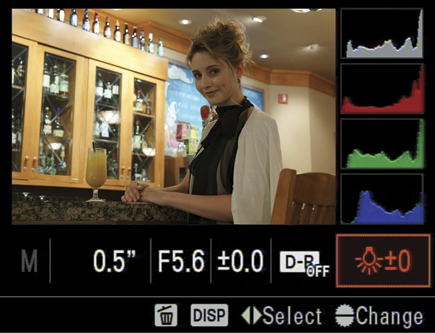
There’s no built-in flash in this high-end D-SLR but it’s equipped with a PC cord socket and supports wireless off-camera TTL flash with optional flash units. Sony provided additional advanced capabilities such as AF Micro Adjustment (for improving an older lens’ autofocus precision), several options for high ISO Noise Reduction (NR), and exposure bracketing in increments as large as +/-2 EV, useful for those who shoot multiple images for composites to be made with HDR software. Instead of providing Live View like many competitors, the A900 offers Intelligent Preview: a
pre-capture image of the subject on its ultrahigh-resolution LCD screen. Make any modifications to exposure, White Balance (WB), or DRO settings and the preview changes accordingly.
Evaluation: While it’s not the most sleek or handsome D-SLR, the A900 features an intelligently-designed user interface with the right mix of analog and electronic controls. Its large, rubberized grip was molded to fit just about any hand. This high-end camera is packed with features, many in the 13-page electronic menu, so it does require study of the instruction manual and experimentation. After an initial setup however, I typically needed to use only the functions in the used only Quick Navi (Fn) screen.
 |
|
|
While some buyers will miss Live View, serious photographers will appreciate Intelligent Preview, using this feature to achieve exactly the desired effects without bracketing. Granted, the process can be a bit slow when you want to achieve very specific effects, so it’s best for use with static subjects.
The SteadyShot stabilizer was certainly useful while shooting at night when a tripod is prohibited or impractical. I made many sharp photos at a 1⁄15 sec shutter speed at a 70mm focal length. Switching to 1⁄8 sec provided a 50 percent success rate. One evening in Vienna, Austria, I went way beyond Sony’s recommendation while using a 180mm focal length and a shutter speed of 1⁄20 sec. Bracing the camera against a concrete pole (for a bit of extra stability), I shot six frames in quick succession; several of the photos are adequately sharp for decent 8x10” prints.
 |
|
|
| |||||||||
|

| ||||||||












 FEATURED VIDEO


Get the Latest Photo Tips, News & Reviews from Shutterbug!







| Camera Reviews Other Reviews | |
Mobile Reviews Photography Reviews Columns | |
News | |
Features | |
How-To | |
Resources |
 © 2026 Shutterbug
AVTech Media Americas Inc., USA
All rights reserved