


- REVIEWS
Camera Reviews 
More Reviews Mobile Reviews Photography Reviews - GALLERIES
- VIDEOS
- BUYER'S GUIDES

Tamron’s AF18-200mm F/3.5-6.3 XR Di II Lens;
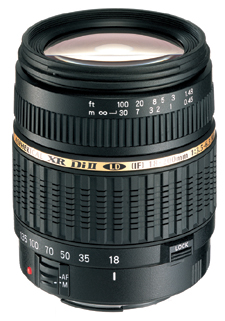 Tamron's AF18-200mm F/3.5-6.3 lens is part of their digitally integrated (Di II) lens series that's designed for digital SLRs and is not recommended for use with cameras having image sensors larger than 24x16mm, or 35mm film cameras. The lens is available in Canon EF, Konica Minolta AF-D, Nikon AF-D, and Pentax AF mounts and is maximized for smaller-sized imaging chips.
The lens is compact, smaller than you might think, because the use of extra refractive index optics permit a smaller lens diameter while maintaining the same aperture values as similar lenses. An internal focusing system provides improved optical characteristics by minimizing light loss in the corners and suppresses focusing aberrations, but my favorite feature is the AF18-200mm F/3.5-6.3's short minimum focus distance (17.7") that at 200mm permits macro-like capture. Low Dispersion (LD) glass elements compensate for chromatic aberrations that can create problems at the telephoto end of the 18-200mm range.
Out Here In The Real World
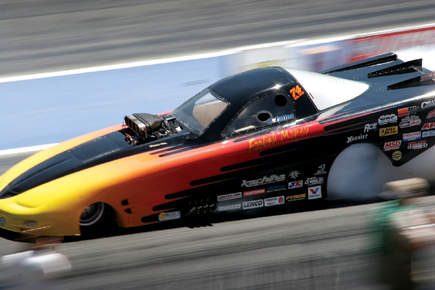
I didn't photograph any lens resolution charts with Tamron's AF18-200mm F/3.5-6.3 lens and I'll bet you won't either. Instead I attached the lens (see "Canon Mount") on two different Canon EOS digital SLRs and captured images with a wide range of subject matter under many kinds of lighting and environmental conditions. Through it all, I never encountered any kind of mechanical or optical flaw in the lens that prevented me from capturing the image I wanted. While photographing drag races with two different Canon digital SLRs with the Tamron mounted on one and a Canon EF zoom on the other, I was struck by how much faster the AF18-200mm F/3.5-6.3 lens focused than the Canon lens. Because of the AF18-200mm F/3.5-6.3's internal focus mechanism, manual focusing with the lens was fast and crisp, too, but I rarely used it that way.
 |
|
|
|
 |
|
|
The build quality of the lens is appropriate for its price point and maybe just a touch better than you might expect and its compact size makes you want to keep it on your camera all day. By using an image circle designed to match that of smaller-sized imaging chips, Tamron produced a lens as compact as its 28-300mm lens, and, depending on your camera's multiplication factor, offers the same angles of view.
 |
|
|
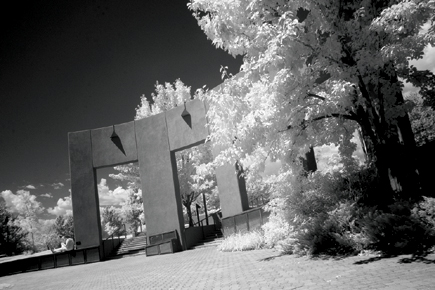
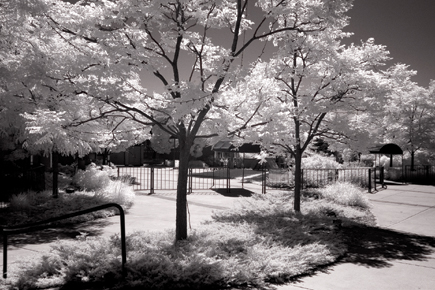
A "tulip" lens hood is included with the lens and did an effective job of controlling flare at the 18mm focal length except in those extreme cases where the sun was shining directly into the lens. Even then, flare was well controlled and while present (I always like to use flare as a compositional element) never significantly reduced the overall contrast of the shot. Sharpness was very good at all focal lengths and with many different kinds of subject matter, varying from portraits to landscapes to digital infrared architectural images. I used the lens to photograph everything from close-ups to flowers to tire-smoking dragsters and never felt like I wanted anything more.
 |
|
|
|
 |
|
|
|
 |
|
|
| |||||||||
|

| ||||||||








 FEATURED VIDEO


Get the Latest Photo Tips, News & Reviews from Shutterbug!







| Camera Reviews Other Reviews | |
Mobile Reviews Photography Reviews Columns | |
News | |
Features | |
How-To | |
Resources |
 © 2026 Shutterbug
AVTech Media Americas Inc., USA
All rights reserved