


- REVIEWS
Camera Reviews 
More Reviews Mobile Reviews Photography Reviews - GALLERIES
- VIDEOS
- BUYER'S GUIDES
Super Lenses
Your Guide To Extreme Optics
You read a lot today about
extreme sports. Extreme kayakers paddle previously unexplored rivers
with class VI (considered impassable) rapids, extreme mountain bikers
make 70mph descents of world class downhill ski courses, and even the
relatively sedate sport of golf now has its extreme practitioners. Well,
fellow shutterbugs welcome to Shutterbug's world of extreme photography. |
|||
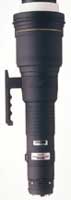
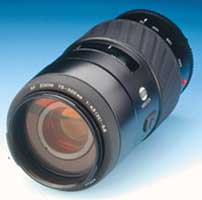
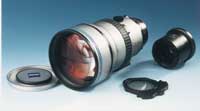
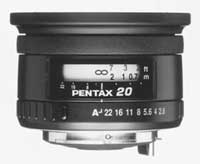
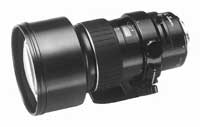
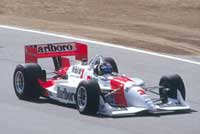
You've heard and perhaps been put off by some of these buzzwords; Apochromatic, low dispersion glass, aspherical elements, floating elements and multi-coatings. So we'll address some of these issues as we go along. The first issue to be raised is why should we even consider using extreme optics. After all, didn't Henri Cartier-Bresson use only a standard focal length lens? The obvious answer is that we need these lenses to achieve the framing or composition we want. An example of this would be architectural interiors where standard wide angle lenses, those in the 24-35mm range, simply aren't wide enough. The only alternative, short of taking out a wall, is to use a 20mm, 17mm, or even shorter focal length. Likewise, a photographer normally chooses a long lens because the subject is too distant or too hazardous to approach with a shorter focal length. Wildlife and sports photography immediately come to mind. And, of course, any beginning photographer can tell you that fast lenses are useful when you are shooting available light photographs in low-light situations. Concerts or museum exhibits where flash photography is prohibited are examples. These are some of the textbook uses of extreme lenses but let's look further and see if we can find different ways to utilize them and perhaps bring a new dimension to our photographs as well. |
|||
Not too many years ago extreme lenses had so many inherent distortions and aberrations that they were considered strictly a last resort. Today, thanks to new types of glass and other aberration taming strategies, they have become more practical and affordable. One of these developments, pioneered by Canon in the 1970s, was the advent of aspherical elements. Spherical aberrations are caused by the fact that light entering the lens at the edge must be bent (refracted) to a greater degree than that entering in the center. By making the lens surface aspherical, or non-spherical in shape, the spherical aberrations are eliminated or, at the very least, brought within acceptable levels. |
|||
Another problem solver was the advent of low-dispersion glass (UD, ED, LD, or ELD, depending on the manufacturer) to help eliminate chromatic aberrations. These improved lenses often carry the designation Apochromatic (APO) and their advantage is that they will focus all three colors of light, rather than just two as is the case with non-Apochromatic lenses, at a common point. This greatly improves color rendition and sharpness. More and more modern lenses are being designed with floating elements, elements within the lens that are repositioned as it focuses or zooms to help optimize sharpness and cancel aberrations. By applying these and other improvements the designers have given us lenses with greatly improved optical qualities. Yet, our tendency is to use them as we always have, ignoring many of the creative possibilities they offer. |
|||
Let's see if we can find
some fresh ways to apply these exciting optics to make our images more
creative and expressive. |
|||
Let's take a moment and put to rest a misconception about perspective. Perspective is effected by the camera to subject distance and not the focal length of the lens. The exception to this rule is fisheye lenses which have uncorrected barrel distortion. So the foreshortening or telephoto perspective that we often see in photos taken along a country lane that stacks up telephone poles or fence posts is a function of the camera position, not the lens focal length. In fact, any focal length lens, at that specific camera position will exhibit the same perspective. Understanding this we can use perspective to our advantage to seemingly change the relative size and spatial relationships in our images. By choosing an extreme telephoto lens and placing the camera at a greater distance from the subject the distance between near and far objects and their size relative to each other, will seemingly change. This altering of reality gives us yet another tool by which we can control the expressiveness of our photographs. The narrow angle of view of a long telephoto lens also reduces the amount of background allowing us to eliminate potentially distracting elements from our images. |
|||
Another lens control that is often thought of as merely technical, not creative, is aperture. This is especially true of very fast lenses. Of course these fast or wide aperture lenses allow us to shoot in low light or available darkness situations, you know, that black-cat-in-a-coal-bin-at-midnight stuff. But they also can help us to isolate our subject against an out of focus background. For example many sports photographers will use a 300mm f/2.8 lens as opposed to the much less expensive f/4 models. Even in good light where the f/4 aperture would be adequate they prefer the softer more abstracted background created by the f/2.8 aperture and its reduced depth of field. Another reason for selecting telephoto lenses with faster maximum apertures is the speed advantage when using tele-extenders or tele-converters. If you have a 300mm f/2.8 lens and couple it to a 1.4x tele-extender the effective focal length is 420mm and the maximum aperture becomes a still relatively fast f/4. With a 2x tele-extender on the same 300mm f/2.8 you would have a 600mm f/5.6. A full f/stop faster than if you had started with an 300mm f/4 lens. You not only have a faster lens but one that will knock the background further out of focus while allowing extreme compressed perspective effects. |
|||
While tele-extenders themselves do not qualify as extreme lenses they can be used in concert with them to greatly enhance their versatility. By combining two tele-extenders you can get an effective focal length that is the aggregate of all of the devices. For example, by combining a 300mm lens, a 2x tele-extender and a 1.4x tele-extender your effective focal length is a whopping 840mm. The results will be best if you place the 2x extender closest to the camera body. Of course there is a price to pay. First, you will lose three f/stops in effective lens speed and it also follows that there will be a loss of sharpness. However, if the prime lens and the tele-extenders are of good quality the overall sharpness should be acceptable. An added plus is that you retain the close focusing ability of the prime lens. Another advantage becomes obvious when you price an 800mm lens. One caveat however, not all tele-extender and lens combinations will physically fit together and even those that do may not focus at infinity so you'll have to play with your equipment a little to see if this technique will work for you. |
|||
By keeping your mind open to
the possibilities and utilizing extreme lenses in new and different ways
you will find your photography growing as your creativity expands. I haven't
listed specific lenses as your list will surely differ from mine and new
lenses are being introduced all the time, but if you wish specifications
and prices of some of these exciting lenses check the Shutterbug Buyer's
Guide, available on newsstands in mid September. |
|||
Manufacturers/Distributors Canon USA Contax (Yashica) |
|||
Leica Camera Inc. Minolta Corporation |
|||
Nikon Inc. Olympus America Inc. |
|||
Pentax Sigma Corporation of America |
|||
Tamron Industries, Inc. THK Photo Products, Inc. (Tokina
lenses) Vivitar Zeiss, Carl Optical Inc. |
| ||
|
||























 FEATURED VIDEO


Get the Latest Photo Tips, News & Reviews from Shutterbug!







| Camera Reviews Other Reviews | |
Mobile Reviews Photography Reviews Columns | |
News | |
Features | |
How-To | |
Resources |
 © 2025 Shutterbug
AVTech Media Americas Inc., USA
All rights reserved