


- REVIEWS
Camera Reviews 
More Reviews Mobile Reviews Photography Reviews - GALLERIES
- VIDEOS
- BUYER'S GUIDES
Tilt, Shift Lenses
Tilting At Windmills
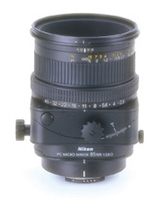
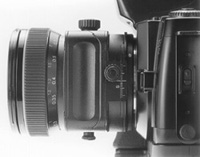
To quote Don Quixote de La Mancha, "Can we ever have too much of a good thing?" Well, finally those who shoot Nikon need not stand idly by while their Canon toting friends do magical things to their photographic subjects with Tilt/Shift (TS) lenses. For some the situation was so frustrating they purchased Canon EOS bodies and equipped them with Canon's tilt/shift lenses although the rest of their gear was Nikon, Minolta, or some other brand. For Nikon users at least, this situation has been relieved with the introduction of the PC Micro-Nikkor 85mm f/2.8D. That last sentence is not a misprint. I said Micro Nikkor. It's a tilt/shift lens that focuses to 1/2 life size at a focusing distance of only 1.3 ft. So why all the excitement you ask? After all, aren't tilt/shift lenses the same as the Perspective Control (PC) lenses architectural photographers use? I know what you're thinking, "I don't even shoot architecture so why should I care?" Well, let's take a look at tilt/shift lenses and see how they just might solve some of your photographic problems. PC/TS Background |
|||
Although it is always a problem for architectural photographers, product and even scenic photography will often be improved by its elimination. View camera practitioners simply raise the front of the camera to solve this problem. By raising the camera lens, while keeping the camera's film plane aligned with the subject's plane, any distortion is prevented. The same technique would apply in photographing a cereal box, or similar subject, in the studio. Here, because the camera position is usually slightly above the subject the photographer could use front fall, a lowering of the lens, to keep the camera back parallel to the subject plane. Perspective control lenses allow only movement on this one plane, a vertical rise or fall, although most can be rotated 90 to allow the movement to be applied to a horizontal plane as well. In view camera work this horizontal movement is called a shift or slide. |
|||
Depth Of Field Camera movements simply allow the photographer to place the focus plane to optimize focus throughout the subject. This placing of the plane of focus makes the most of what depth of field there is. This all sounds very technical and, if you're new to this stuff, it is just a little confusing. Not to worry. With perspective control lenses, tilt/shift lenses, or even view cameras for that matter, all this stuff is visual. You can see it happening in the viewfinder or on the ground glass. No dark magic is involved; you shift or tilt the lens one direction and you see the change in the camera's viewfinder. Not that it will be entirely intuitive. You will have to practice a bit, but the principles are definitely not rocket science. I figured it out, so I know you can. TS In The Field |
|||
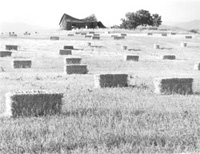
Well, I've got my shot all lined up, camera right on the deck inches from the nearest blooms, wide angle lens on the camera to push the background farther away--but I'm going to have to stop down to f/32 to hold sharp focus throughout the scene. Remember what I said about wind? I'm really in the deep stuff now because at f/32 I've got to shoot around a 1/30 or 1/15 of a sec. In the wind, with all these flowers quivering on their tiny little stocks? Never happen. But, you and I are clever devils and we thought to bring a tilt/shift lens. So, I put the tilt/shift lens on the camera, focus on the distant flowers and then slowly apply the lens tilt so the plane of focus, which is perpendicular to the lens axis, tilts to match the plane of the subject. When the near blooms come into focus (again, this can be observed in the viewfinder) I have optimized the focus for this subject. This is accomplished with the lens wide-open. Stopping down one or two f/stops will improve sharpness and give a little more depth of field, and there you have it. Everything in focus from near to far and I only had to stop down a couple of stops so my shutter speed is a more reasonable 1/500 or 1/1000 of a sec, which should stop the wind motion. It actually takes less time to perform that little dance than it took to read about it, and it can all be encapsulated in four words, focus far/tilt near. That is, you focus on the distant point you want to be sharp and then use the tilting feature of the lens to bring the near point in focus. Honestly, it's that simple. This is one reason photographers like Ansel Adams, David Muench, and so many others work with view cameras. They can achieve images with universal focus; everything is rendered sharply, inviting the viewer to visually wander throughout the scene. |
|||
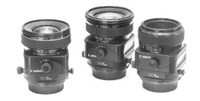
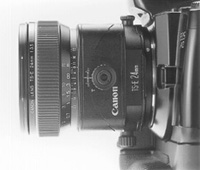
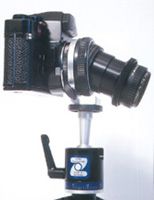
Scenics, Too So, who makes tilt/shift lenses? Well, currently only Canon (www.usa.canon.com) and Nikon (www.nikonusa.com). Canon has three tilt/shift lenses in their catalog: TS-E 24mm f/3.5L, TS-E 45mm f/2.8, and TS-E 90mm f/2.8. The previously mentioned Nikkor lens is the PC Micro-Nikkor 85mm f/2.8D. If you don't shoot Canon or Nikon don't despair. All is not lost. There exists a device that is adaptable to almost any camera you care to name. It is available as a tilt adapter, a shift adapter, or a combination of both tilt and shift. It is made and marketed by Zrkendrfer Film-Und Fototechnik of Mnchen, Germany. They also are purveyors of some other really nifty equipment, and a number of the folks at Shutterbug use the stuff. Check out the web site at: www.zoerk.com. Imagine what a tool as versatile as a tilt/shift lens or adapter could do for your creativity. Many noted nature photographers, George Lepp and John Shaw to name two, have already made that discovery and believe me; they aren't out there just tilting at windmills. Steps For Using The Tilt/Shift Lenses To Optimize Depth Of Field
|
|||
|



| ||
|
||


 FEATURED VIDEO


Get the Latest Photo Tips, News & Reviews from Shutterbug!







| Camera Reviews Other Reviews | |
Mobile Reviews Photography Reviews Columns | |
News | |
Features | |
How-To | |
Resources |
 © 2026 Shutterbug
AVTech Media Americas Inc., USA
All rights reserved