


- REVIEWS
Camera Reviews 
More Reviews Mobile Reviews Photography Reviews - GALLERIES
- VIDEOS
- BUYER'S GUIDES
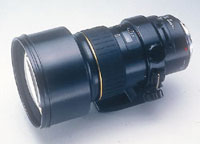
Tamron SP AF 300mm f/2.8 LD [IF] Lens And AP AF Tele-Converter
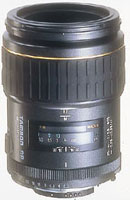
Renowned for its line of award-winning broad range zoom lenses, Tamron also offers several single focal length models. Perhaps the least well-known of this line is model No. 360: the SP 300mm f/2.8 LD IF, available in autofocus and manual focus mounts. (The latter requires one of the Adaptall II mounts to fit the camera brand in use; if you own two brands, buy two affordable Adaptall II devices.) And yet, this telephoto lens deserves more recognition since it is a professional tool of high quality, and very versatile when used with the new pro autofocus tele-converters: the Tamron SP AF 1.4x or the SP AF 2x model. While shooting stock in Florida, I had an opportunity to test the lens, and the new SP tele-converters for bird photography and for various subjects at Cypress Gardens near Winter Haven. Although not inexpensive, they are all highly competitive in price with other brands and offer fine optics for high imaging performance. I tested the models intended for Canon EOS cameras, but the others (with other AF mounts) are nearly identical, except as mentioned later. Characteristics/Construction. This "fast" 300mm telephoto lens, in gunmetal gray, boasts a professional look and feel. Naturally, it is quite hefty/large due to the aluminum alloy barrel and large diameter optics required by the wide aperture. The Canon model includes an oversized rotating/removable tripod collar for extra stability and a large "foot." In handheld use, I removed this accessory to reduce weight. The manual focus--and the Nikon and Minolta AF models--feature a smaller tripod collar, non-removable (and do not include a focus motor) so they are lighter in weight. |
|||
The rubberized
focusing ring is wide (1.5") and well knurled for good grip. Instead
of a small AF/MF switch, the new model for Canon AF cameras includes a
clutch; simply push the ring forward to switch from manual to autofocus.
This design offers a significant advantage: the focusing ring does not
rotate in AF operation because the clutch disengages it from the internal
mechanism. With all models, manual focus is well damped, with enough friction
for a familiar feel; operation is silky smooth.
There's a distance scale in feet/meters under glass, an infrared focusing mark, and a depth of field scale for f/16 and f/32 only. Since telephotos of this type tend to be used at wide apertures, the latter is rarely needed. The Instruction Manual does include a depth of field chart for all apertures, but most owners would use their cameras' depth of field preview control instead. The removable hood--with unusual screw locks for extra security--is very deep and well flocked to minimize flare. It's made of a composite material for light weight and it mounts on the lens in a reversed manner for storage. A shoulder strap and leatherette carrying case are included. Like most fast telephotos, this one accepts rear mounted filters: the small/affordable 43mm size. Note: The rear filter holder of the model for Canon AF cameras includes a rotator mechanism; intended for use with a polarizer, this device is highly useful for quickly varying the filter's effect. |
|||
High Tech Optics. The SP designation (and the gold stripe on the barrel of the lens) denotes "Super Performance" confirmed by the advanced optical design. Note the following: · Two large elements--the first two in the formula--of Low Dispersion (LD) glass effectively correct chromatic aberration, including secondary spectrum, ensuring high sharpness plus freedom from comatic flare and color fringing even at f/2.8. · Internal focusing ensures that the physical length of the barrel remains uniform so the center of gravity does not shift; balance remains optimal at any focused distance. This is a definite advantage with any long/heavy lens when used on a tripod. · A "floating focus" system varies the interval between certain lens elements; they can move independently while maintaining an optimum distance from each other. Especially in close focusing, this design counters aberrations reducing the risk of image degradation. · The diaphragm was designed with nine specially shaped blades, so the aperture forms an almost perfect circle. The round (not hexagonal) blobs in out of focus highlights in the background do make for a much more pleasing effect. |
|||
Lens Evaluation. As with many lenses, autofocus is not silent, but the sound level is not obtrusive. The more effective the AF system of the camera--as with the EOS-1 V vs. the older EOS-10s--the more reliable the focus acquisition proved to be. When tracking fast moving water-skiers at Cypress Gardens for example, the Tamron lens was most successful with the newer camera. Used with a recent, high tech AF camera body, the SP AF 300mm f/2.8 LD [IF] telephoto is quite capable of tracking subjects in motion, especially when they are not moving in an erratic manner. Since a lens of this type is most frequently used at wide apertures, the vast majority of my slides were made at f/2.8 or f/4. Overall, I was impressed with image clarity and sharpness across the frame, with minimal drop-off in definition at the edges. Under a 10x loupe, I detected no evidence of any color fringing. In the f/5.6 to f/8 range of apertures, image quality was even higher: absolutely superb. The results of my field tests confirm suitably high contrast, too, and little flare even in backlighting, evidence of a well designed lens hood and internal precautions. In terms of its optics (and construction) this is definitely a professional lens that should satisfy the working pro. I have already sent many of my slides to a stock agency, sure that they will meet the demands of critical photo buyers. Considering the relatively affordable price, this Tamron telephoto lens rates high on my price/value scale. |
|||
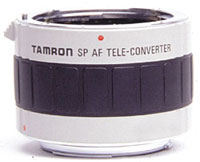
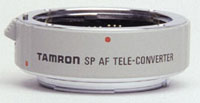
New SP AF Tele-Converters. Tamron offered an earlier series of tele-converters, without the SP designation. Note that the newer SP AF models have been completely redesigned. The SP AF 1.4x model includes five (vs. four) elements and the SP AF 2x model has seven (vs. four) to improve imaging quality. (Current AF mounts include Canon, Nikon-D, and Pentax.) Because the converters' optics do not protrude, they will fit numerous lenses, including many zooms. These devices do maintain autofocus operation with most AF lenses and cameras; more specifically, note the following, based on technical information provided by Tamron: |
|||
· Both AF SP models incorporate an upgraded CPU which allows users to use them with Nikon AF-D lenses as well as AF-S (Silent Wave) or AF-I lenses with built-in focus motor; "full compatibility is assured." This also applies to Canon EF mount lenses, including IS lenses. · The AF SP converters detect the type of lens in use. When mounted on AF lenses that incorporate a focus motor--on a camera that also has a built-in focus motor--the camera body motor disengages. In addition, the f/stop number denoted in the camera's data panels does represent the actual value. For example, when the SP AF 1.4x converter is used on an f/4 lens, the maximum aperture is shown as f/5.6 on the camera, confirming the loss of one stop of light. When the SP AF 2x converter is used on that lens, the maximum aperture is shown as f/8, confirming two stops of light loss. (All tele-converters produce such light loss, but not all allow the true, effective aperture to be displayed by the camera's data panel.) · These converters should be used with lenses of 90mm and longer to minimize vignetting (darkening of the corners of an image). Optimum results are produced with 300mm and longer focal lengths. With the Canon EF 50mm f/2.5 Compact Macro and EF 100mm f/2.8 Macro lens, malfunction of autofocus may occur when the tele-converter is mounted. · Tamron recommends against stacking converters or using one with an extension tube. |
|||
Tamron Upgrades SP AF 90mm f/2.8 1:1 Macro Lens Released in 1997, the Tamron SP AF 90mm f/2.8 1:1 Macro lens has received rave reviews and prestigious honors including the European "Lens of the Year: 1997-1998" award. This true Macro lens features excellent portability and operational ease plus outstanding optical quality as detailed in my Test Report in the May 1998 issue of Shutterbug. In February 2000, Tamron announced an improved version of this Macro lens. The upgrades are in its mechanical features and cosmetic design. The latest version for Canon EOS and Nikon-D models incorporates a new AF/MF switch-over mechanism that is cross-coupled with the focus ring clutch; see the description and benefits of this same feature in the 300mm f/2.8 section. Thankfully, its optics are unchanged and I found the newer model just as impressive in terms of performance, with high sharpness across the frame. With a compact lens like this, I really appreciate the fact that the focus ring does not rotate in AF operation. I can grip the barrel as desired without worrying about interfering with focus operation. Tamron has also enhanced the physical design: with a new rubber pattern on its focus control ring; easier to read distance scales and indices; and a new gunmetal black finish that complements its sophisticated appearance. This new Tamron SP AF 90mm f/2.8 1:1 Macro lens (designated as model No. 172E) is available in AF mounts for Canon, Minolta, Nikon-D, and Pentax. Tele-Converter Evaluation. Both Tamron SP AF models are very well finished, with stainless steel mounts. The compact 1.4x model seems quite heavy (4.9 oz) while the 2x model seems light (7.5 oz) for its larger size. Both mate to a lens and camera firmly, with an authoritative click. I confirmed compatibility with EOS cameras of three generations: EOS-10s, EOS-1N, and EOS-1 V. Full autofocus and Image Stabilizer operation was maintained when I used the SP AF 1.4x converter on a Canon EF 300mm f/4L IS USM telephoto. As well, autofocus continued to operate when used on the Tamron AF SP 300mm f/2.8 LD [IF] and on a Sigma AF 70-200mm f/2.8 APO with HSM focus motor. Note: Because all converters reduce the light reaching the AF sensors, autofocus response--especially in dim light--is not as quick. When the effective maximum aperture of the lens/converter combination is smaller than f/5.6, most autofocus cameras disengage AF operation. This occurs with the Tamron SP AF models, as well as the camera makers' own brand of tele-converters. In spite of the above, autofocus response on sunny Florida days was very good with the SP AF 1.4x model on an f/2.8 lens and quite good on an f/4 lens. As with all brands of tele-converters, the SP AF 1.4x model proved superior in maintaining high image quality over the 2x model--especially at wide apertures. Because it also assured more reliable auto-focus, I would recommend the 1.4x model with any lens whose maximum aperture is smaller than f/2.8. As with any high quality tele-converter, use these accessories on lenses with excellent optics (not inexpensive zooms) for pro caliber results. When using them on zooms, do so only at longer focal lengths, like the long end of a 70-200mm or 70-300mm model. |
|||
In a nutshell, the SP AF 1.4x converter maintained pro caliber sharpness with the pro 300mm lenses, especially at one stop down from maximum aperture. The SP AF 2x model performed best around f/8 on pro lenses, assuring image quality adequate for a fine 8x10 print. These more expensive new Tamron tele-converters--with more optical elements--definitely outperformed their more affordable (not SP designated) predecessors and would be a better investment. For additional information on Tamron SP lenses and tele-converters, contact Tamron Industries Inc., 125 Schmitt Blvd., Farmingdale, NY 11735; (631) 694-8700; fax: (631) 694-1414; www.tamron.com Technical Specifications Tamron SP AF 300mm
f/2.8 LD [IF] |



| ||
|
||


 FEATURED VIDEO


Get the Latest Photo Tips, News & Reviews from Shutterbug!







| Camera Reviews Other Reviews | |
Mobile Reviews Photography Reviews Columns | |
News | |
Features | |
How-To | |
Resources |
 © 2026 Shutterbug
AVTech Media Americas Inc., USA
All rights reserved