


- REVIEWS
Camera Reviews 
More Reviews Mobile Reviews Photography Reviews - GALLERIES
- VIDEOS
- BUYER'S GUIDES
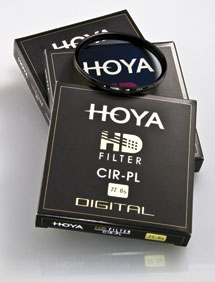
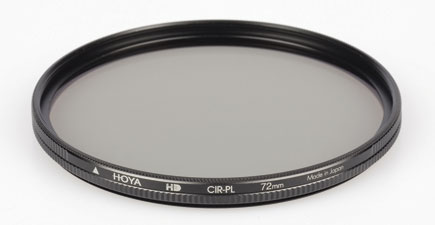
Hoya HD Circular Polarizers; Still A Prime Filter In The Digital Age
When I shot film, I carried a number of glass filters in my camera bag to every destination. And since I was shooting slide film, I needed the effect then and there—I didn’t depend on post-processing. Now that I’m shooting digital, one would think that I no longer needed glass filters. Well, that’s a misguided notion. There is always at least one filter in my camera bag: a polarizing filter. And specifically, with autofocusing/autoexposure D-SLRs (those employing a beam splitter), that filter is a circular polarizer. This, I’ve found, is the most utilitarian filter ever invented! What’s more, there is no effective software route to precisely duplicate all its effects.
 |
|
|
|
 |
|
|
Why, When, And How To Use A Circular Polarizer
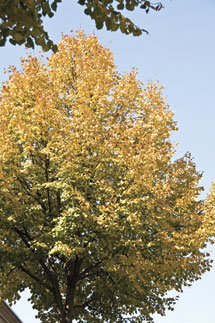
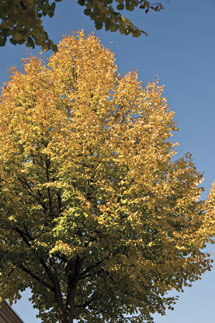
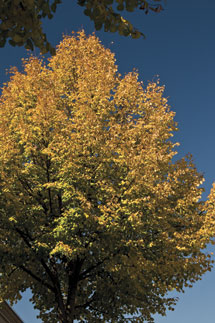
A polarizing filter acts upon light waves reflected off any non-conductive, nonmetallic surface by screening out this polarized light. Translation: it blocks a certain amount of light from reaching the digital imaging sensor, so you lose some light that might otherwise contribute to the exposure. But you also get rid of annoying reflections and glare (from windows, artwork, buildings, plastic, snow and ice, etc.) and even atmospheric haze (reducing the bluish cast)—all to varying degrees. Added benefits include intensifying colors, penetrating the surface of water (most effective with calm waters), making foliage (especially fall colors) more vibrant, adding depth to blue skies, and, as an extension of that, making clouds stand out by deepening the blue sky. (Bonus: You can also use it to control the intensity of rainbows!)
 |
 |
|
 |
||
|
||
When it comes to darkening blue skies, the effect from a polarizer is most pronounced in parts of the sky at a 90? angle relative to the sun (to previsualize the effect, form an “L” with index finger and thumb; point one finger at the sun and the other points at the part of the sky—describing an arc—that will be most affected). My approach is much simpler: I anticipate the deepest effects in areas of bluest sky. (Tip: When using wide angle lenses, especially ultra wides, the effect on the sky will likely be uneven, going from darker, away from the sun, to lighter, closer to the sun.)
There is one more use for a polarizing filter: as a variable neutral-density filter. So when there’s too much light outside or you’d like to use larger f/stops for selective focus or slower shutter speeds to blur motion, a polarizing filter might do the trick quite nicely.
 |
|
 |
|
|
| |||||||||
|

| ||||||||


 FEATURED VIDEO


Get the Latest Photo Tips, News & Reviews from Shutterbug!







| Camera Reviews Other Reviews | |
Mobile Reviews Photography Reviews Columns | |
News | |
Features | |
How-To | |
Resources |
 © 2026 Shutterbug
AVTech Media Americas Inc., USA
All rights reserved