


- REVIEWS
Camera Reviews 
More Reviews Mobile Reviews Photography Reviews - GALLERIES
- VIDEOS
- BUYER'S GUIDES
Do It Yourself
Build A Variable Extension Tube
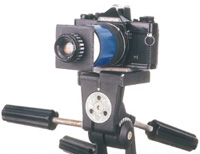
This month's project is a variable-length extension tube for close-up photography. It provides several inches of magnification adjustment without the need of an expensive and cumbersome macro bellows unit, and allows virtually any lens to be used. I mounted a 75mm enlarging lens on the one shown here, but a 50mm "normal" lens from almost any camera works very well. This is a Level 1 project (see the April 2000 issue for a run-down of my do-it-yourself complexity rating scale) made from inexpensive materials that can be put together in a few hours by anyone with basic skills and ordinary household tools. The body of the extension tube is made from a cardboard mailing tube, with an off-the-rack US Post Office version fitting the bill perfectly. The smooth, adjustable slide action comes from the tube's pull-off end cap (the crimped-on metal end insert easily removed with pliers), helped along with a few turns of black photo tape as shown. The finished tube can be made to any length, but remember that it takes only a small amount of extension to focus the lens very close to the subject and produce a small field of view. A simple rule to help in figuring is that a 1:1 magnification--the image recorded on film being the same size as the actual subject--requires equal lens to film and lens to subject distances, each being twice the focal length. |
|||
As a long tube will not allow the lens to be pushed close enough to the film for moderate close-ups, consider building two tubes of different length, with provision for using the same lens on each, for a wide magnification range. This design can also be used to make an infinity-focusing lens mount, letting a medium format enlarging lens, or a medium or large format taking lens, be used for telephoto effects on a 35mm camera body. If basic close-up technique is new to you, invest in one of the many good books on the subject frequently advertised in Shutterbug. If you have an autofocus camera, switch it to manual focus mode when using the tube. Aperture-priority exposure mode will give accurate results with many cameras, but some newer models rely upon electronic information transfer between the lens, commercially produced close-up device, and body to function properly. Manual metering mode will be dependable on the majority of cameras, but be sure to check your instruction book for any special considerations when using non-coupled lens accessories such as this. Many new and old cameras have interchangeable focusing screens so that a special (usually all-matte finish) version can be substituted for easier visual focusing of dim close-up subjects. Remember, even wide-open, the effective aperture of the lens decreases, along with the overall amount of light, as it is moved away from the film plane. |
|||
The diagrams and photos will guide you through the construction of the variable extension tube. However, whether you use our DIY rig or a costly store-bought model, understand that close-up photography is a technically demanding area with its own set of potential problems and requires patience and practice for successful results. Enjoy! Parts List |


| ||
|
||


 FEATURED VIDEO


Get the Latest Photo Tips, News & Reviews from Shutterbug!







| Camera Reviews Other Reviews | |
Mobile Reviews Photography Reviews Columns | |
News | |
Features | |
How-To | |
Resources |
 © 2026 Shutterbug
AVTech Media Americas Inc., USA
All rights reserved