


- REVIEWS
Camera Reviews 
More Reviews Mobile Reviews Photography Reviews - GALLERIES
- VIDEOS
- BUYER'S GUIDES

Passport
No Paperweight
Since this is the magazine's annual issue devoted to lenses, let's talk about the lens most likely to be forgotten or ignored, the one that practically no pro pulls out of his bag, but which is my favorite: the 50mm f/1.4. You know, the paperweight. I discovered the value of the 50mm pretty much by accident, actually, by mistake is more accurate. Like most professionals, I originally used that lens because it was the one that came on the camera when I bought it, and I cut my teeth on it when I was learning photography. Then came the era of zooms and ultra wides and fancy this and special that, and somewhere in there I put the 50 in the bottom of my bag and left it there, pretty much forgotten. Then one day in the spring about four years ago, I set out to take some photographs of my wife and 6-month-old daughter in a beautiful wildflower field near my home here in Texas. I grabbed a camera and a lens, tossed them in a little waist pack and we were off. When we got to the spot, lo and behold, I discovered I had brought the wrong lens. I thought I was grabbing my 28 or my 35, when in fact I'd taken the 50. So I sputtered a bit and then started taking pictures--and right away I liked the angle of view. Then when I saw the chromes, I thought, wow, this is great! Not only did the photographs look very cool, but they were some of the sharpest images I'd taken in a while. |
|||
And that started my love affair with the 50mm f/1.4. For the past four years now I've used that lens for 60 percent of my shooting. I've got three of 'em and I often put them on three bodies and run one for color, one for black and white, and one for cross processing, infrared, grainy, and other specialty film stocks. To me, the 50 is the lens that comes closest to seeing a scene the way I do--it comes closest to human vision. With the 50 on my camera I can look at a scene and know that if I like the way it looks to my eye, then most likely it's going to look pretty much the same through the 50--as opposed to putting on, say, a 28mm, which will make the view wider, or an 80-200mm, which will compress elements of the scene. With some lenses you have to see how the scene looks through the lens, or you may know from experience what it's going to look like. But with the 50, it's going to look like what it looks like right now, and that's one of the most freeing aspects of my love affair with the 50mm. If I like what I see, I'm going to get it with the 50. |
|||
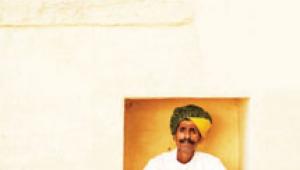
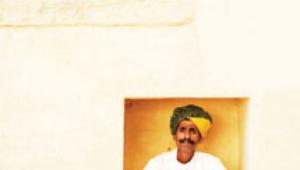
You might think that the 50mm focal length is limiting, but I don't see it that way. I really have two content specialties. We talk about one of them, travel photography, in this column, and while I do a lot of travel photography, the reality is that my bread-and-butter images are the people and lifestyle pictures I take for stock, and it's in that area that I use the lens most often. But from a travel photographer's point of view, there are distinct benefits to the 50mm f/1.4. First, its incredible speed and sharpness; then, the fact that the 50mm lens requires contact with your subject. I like to get close to my subjects, either physically or with a zoom, but with, say, an 80-200mm lens on the camera, I'm backed up, on sticks and looking professional--so there's a real space as well as a perceived distance between me and my subject. With the 50, I'm hand holding right in there, talking with the subject while I photograph. In a way, that lens forces contact and forces me to get involved with my subjects and often give them direction. |
|||
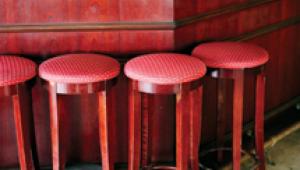
Finally, there's a little technical effect that the 50 delivers. With it, I can shoot a lot of cool, shallow depth of field images that provide the look of soft focus. Shooting wide-open, I can focus on a person's eye or eyelash or part of their cheek, and that's the only thing in the photo that's sharp. It's a look similar to what you can get from the swing and tilt capability of a medium format camera. I think that wide-open, background out of focus artistic look draws more attention to the sharp area of my subject, and it's become one of my signature looks. |
|||
Although my 50mm lenses are all autofocus models, I currently use them in manual mode. I say "currently" because right now I'm sporting my first-ever pair of glasses, and at 46 years of age I think I'll soon be pledging allegiance to autofocus, just as I have to my 50mm lens. |


| ||
|
||








 FEATURED VIDEO


Get the Latest Photo Tips, News & Reviews from Shutterbug!







| Camera Reviews Other Reviews | |
Mobile Reviews Photography Reviews Columns | |
News | |
Features | |
How-To | |
Resources |
 © 2026 Shutterbug
AVTech Media Americas Inc., USA
All rights reserved