


- REVIEWS
Camera Reviews 
More Reviews Mobile Reviews Photography Reviews - GALLERIES
- VIDEOS
- BUYER'S GUIDES
Save Money And Get Better Results, Too
Processing Your First Roll Of Black And White Film
It seems that as technology
strives to make picture taking easier and more digitalized there is
a backlash among many photographers toward rediscovering techniques
and processes of the past. Therefore, I thought this would be an opportune
time to share my technique for processing black and white film. |
|||
The first chemical is the developer.
The developer will convert or reduce the exposed silver halide crystals
in the film's emulsion to black metallic silver. This changes the
invisible or latent image to a visible one. Developers, like film itself,
can be classified by their applications. There are high-speed or high-activity
developers designed to get the most out of a film's inherent speed
but they tend to increase film grain. There are fine grain developers
that use silver solvents, usually sodium sulfite, to reduce the apparent
grain in the film but these can cause a loss of sharpness. High acutance
developers work in conjunction with slow, thin emulsion films to enhance
the sharpness in prints but often at a loss of some film speed. The most
popular class of film developers are what are known as the general purpose
developers. These give good results with a broad range of films and for
many photographers are the only developer they require. |
|||
Next, to render the film no
longer light sensitive and the images permanent, we use fixer. I prefer
a rapid fixer as it reduces the time that the film is wet which helps
to minimize the film grain. To further reduce wet time it is a good idea
to use a hypo clearing bath of some sort after the fixer which will cut
down on the time that the film has to wash. So much for the overview,
let's get to work. |
|||
I suggest a general purpose
developer and highly recommend that you mix your developer with distilled
water rather than tap water. This eliminates another variable and gives
more consistent results. With most developers the recommended processing
temperature is 68°F but check the instructions that came with your
chemicals. Once the tank is full rap the tank on the counter gently to
dislodge any air bubbles adhering to the film and begin inverting the
tank. Note: some tanks cannot be inverted and with these it is very difficult
to get even development of the negatives. Agitation of the developer is
crucial and must be the same every time or your results can vary wildly.
With most films two to three inversions in 5 sec is the proper rate. However,
with T-grain films, such as Kodak T-Max or Ilford Delta, the agitation
should be more vigorous about five inversions every 5 sec. Continue agitating
the film for the first 30 sec that it is in the developer. Remember there
are three things that control the developing process: time, temperature,
and agitation. Keep all three controlled and consistent and your negatives
will come out every time. After the initial 30 sec set the tank down,
give it a quarter turn, and wait 30 sec. After 30 sec has elapsed pick
up the tank, agitate it for 5 sec using the same inversion rhythm as before,
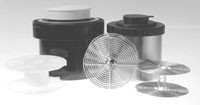
set it down, and again give it a quarter turn. Processing Steps Supplies Hardware Manufacturers/Distributors Brandess/Kalt/Aetna Group (Heico
Perma Wash) Darkroom Innovations Doran Enterprises Dot Line Corp. Eastman Kodak Falcon Safety Products, Inc. JOBO Fototechnic, Inc. Photographer's Formulary,
Inc. |



| ||
|
||


 FEATURED VIDEO


Get the Latest Photo Tips, News & Reviews from Shutterbug!







| Camera Reviews Other Reviews | |
Mobile Reviews Photography Reviews Columns | |
News | |
Features | |
How-To | |
Resources |
 © 2026 Shutterbug
AVTech Media Americas Inc., USA
All rights reserved