


- REVIEWS
Camera Reviews 
More Reviews Mobile Reviews Photography Reviews - GALLERIES
- VIDEOS
- BUYER'S GUIDES

Three Tips For Shooting Action
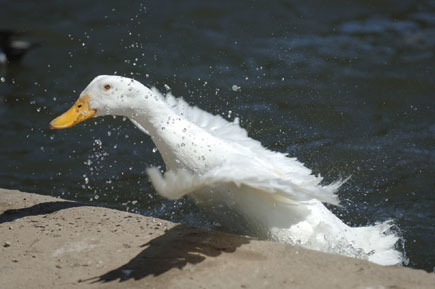
Photographing action is quite challenging, but can also be very rewarding. The keys to success are knowing your camera, knowing your subject...and LOTS of practice. You have to be able to set focus and exposure quickly (or monitor them quickly, if using an automatic camera). In short, you can't be fumbling around trying to figure out how to apply exposure compensation or switch from single-area AF to multiple-area AF or vice versa while the action is happening. Camera operation must become second-nature.
 |
|
|
It's also very helpful to know as much as possible about your subject, be it an animal or a sport. The more you know about your subject, the better you'll be able to anticipate photo ops, and be ready when they occur. Learn as much as you can about your subjects from books, online, and other sources, and by watching them yourself.
There's a lot of luck involved, too, of course. But you'll find that the more you practice and the more you learn about your subjects, the more often you'll get lucky.
TIP 1: Shutter Speed
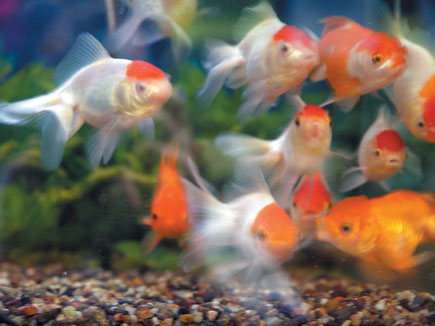
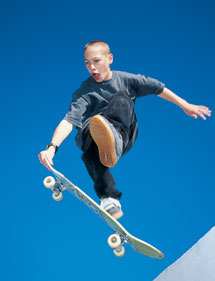
There are two basic ways to deal with action subjects: freeze them sharply, or blur them. Using a fast shutter speed will sharply freeze the subject, while using a slow shutter speed will blur it. How fast a shutter speed it takes to freeze the subject, and how long a shutter speed you'll need to blur it effectively, depend on the subject's speed and distance from the camera, the focal length of the lens you're using, and the effect you want. The faster the motion, the closer the subject, and the longer the lens, the faster the shutter speed you'll need to "freeze" the motion.
With the foregoing in mind, it's a good idea to try a variety of shutter speeds each time you encounter a new action subject, to see which one(s) produce the best results for that subject. You'll soon learn what speeds will produce the effects you prefer.
 |
|
|
Tip 2: Panning Techniques
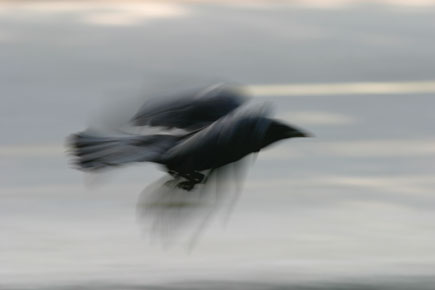
If you use a slow shutter speed and keep the camera still, the subject will move through the frame and come out blurred. This is fine for subjects like hovering hummingbirds, where the body will be sharp and the wings blurred, but subjects moving across the frame will just be blurred. A better way to deal with such subjects at slow shutter speeds is to pan the camera--track the subject with the camera, moving the camera to keep the subject in the same spot in the finder. The result will be a sharp subject and a very blurred background, emphasizing the subject's speed.
 |
|
|
Track your subject through the viewfinder, press the shutter button halfway down to activate the AF system, continue tracking the subject, press the shutter button all the way down to make exposure, and continue tracking the subject (follow-through is important: if you stop tracking the subject when you take the shot, the subject will blur and possibly even move out of frame by the time the camera makes the exposure). Like all action techniques, this one takes practice to master, but the results are worth the effort.
 |
|
|
| |||||||||
|

| ||||||||















 FEATURED VIDEO


Get the Latest Photo Tips, News & Reviews from Shutterbug!







| Camera Reviews Other Reviews | |
Mobile Reviews Photography Reviews Columns | |
News | |
Features | |
How-To | |
Resources |
 © 2026 Shutterbug
AVTech Media Americas Inc., USA
All rights reserved